Three silhouettes,
one source.
A sedan, a fortress, a blade. Each engineered around the same photovoltaic architecture, diverging only in intent.
Dragon
from $85,000
Sovereign
from $95,000
Phantom
from $115,000
01, Grand Touring Sedan
Born from the sun.
For thousands of years, the sun told sailors where they were and where they were going. The Dragon draws its power from the sky above and cuts through the dark below.
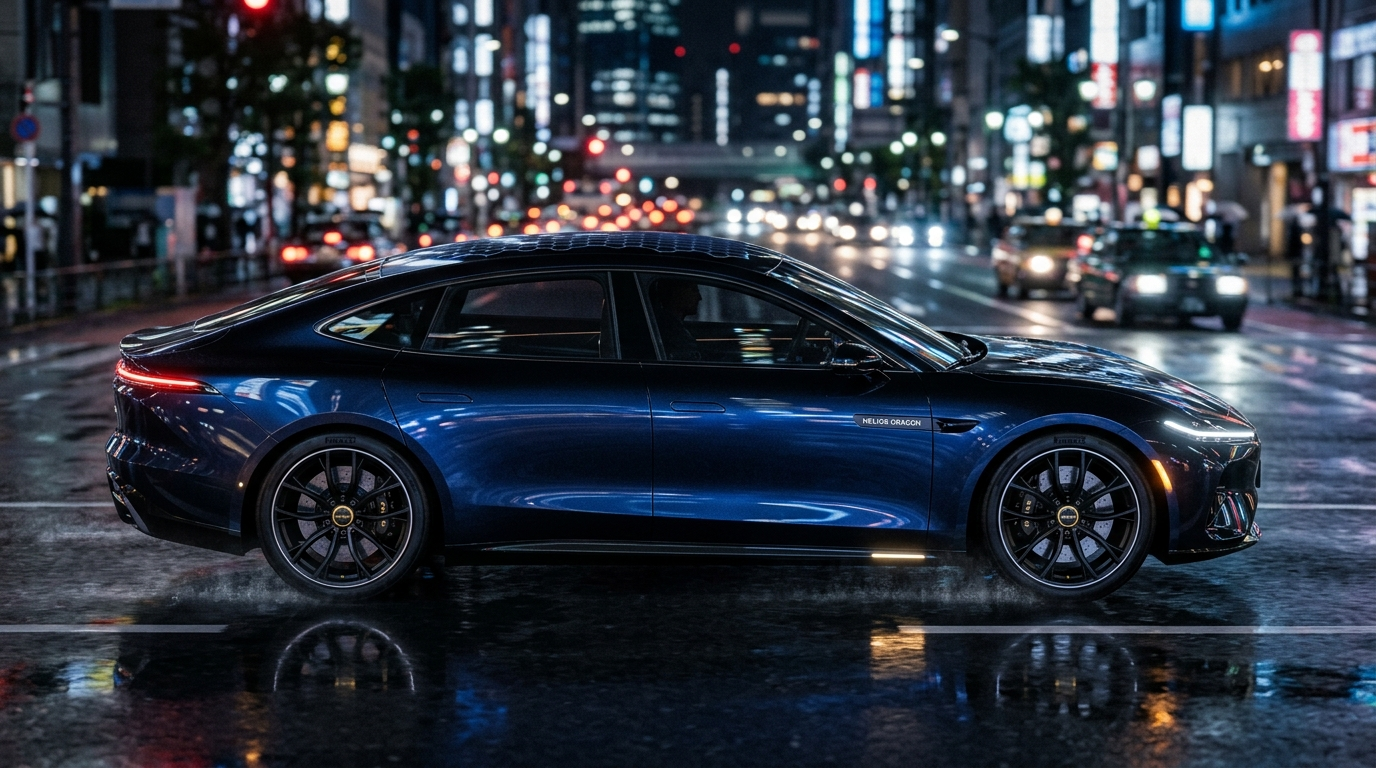
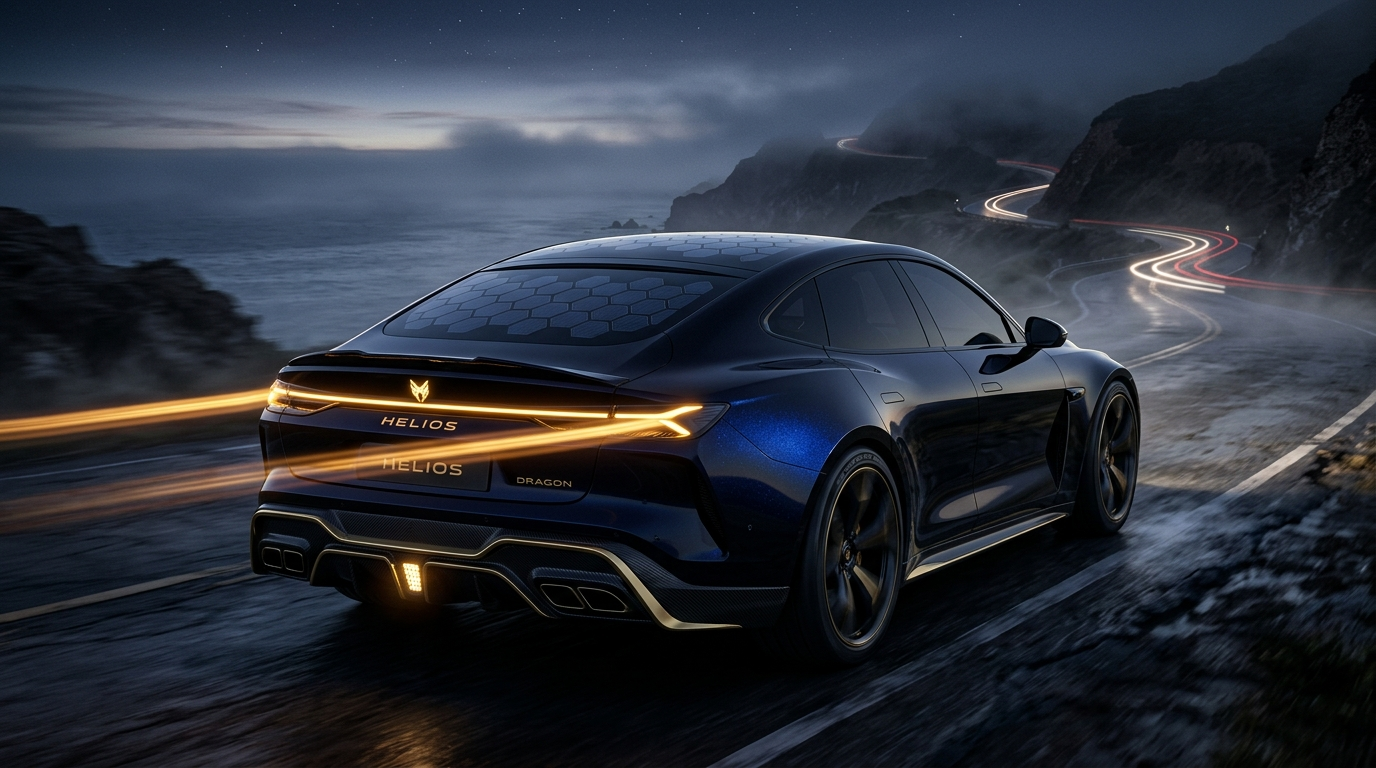
Specifications are target figures for pre-production vehicles and are subject to change. Range figures are WLTP estimates. Solar harvest and solar-only range figures are calculated at the stated panel efficiency under full-sun conditions and vary with climate, season, orientation and use.
Every surface considered.
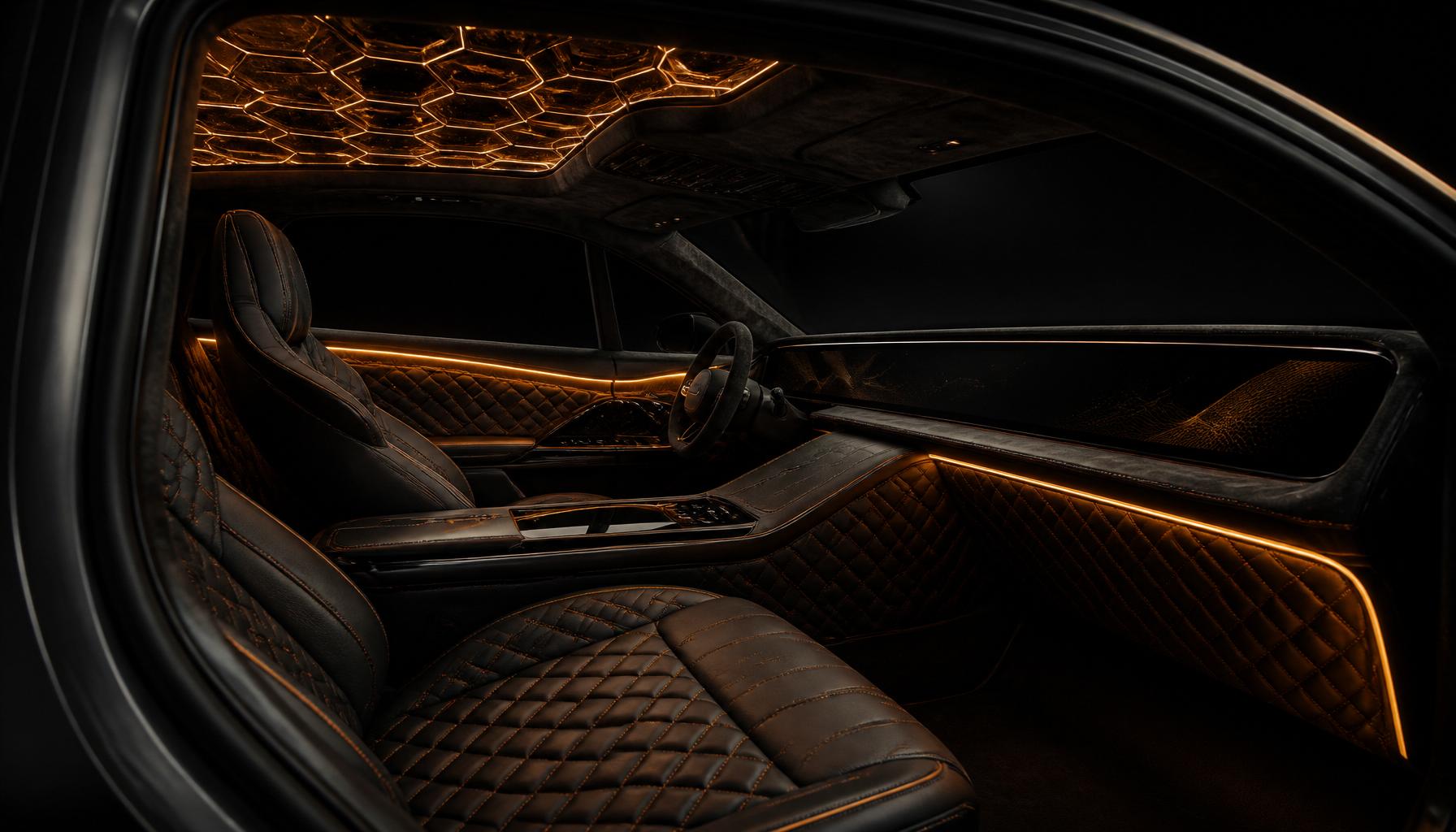
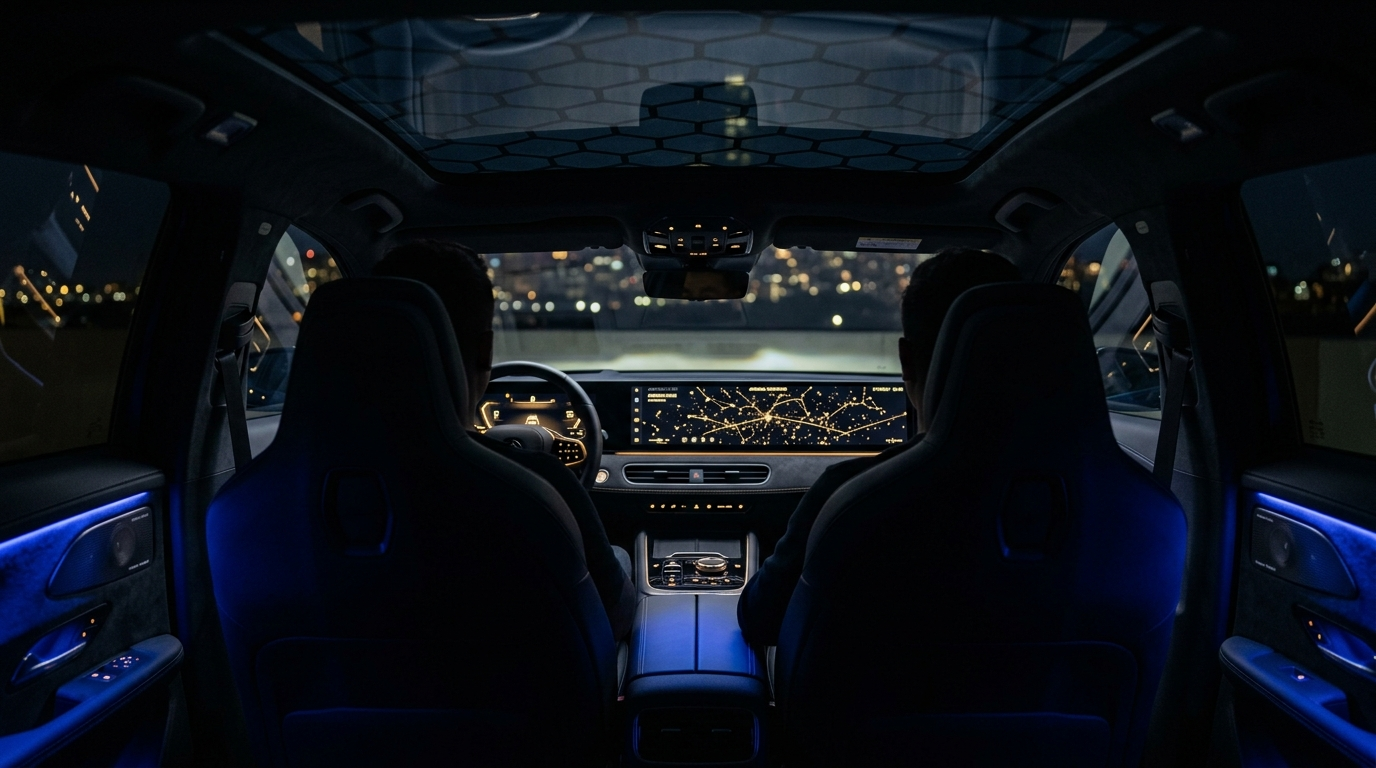
Diamond-quilted obsidian leather throughout. Zero visible technology. Everything present.
Zero-Button Dashboard.
A 52-inch curved OLED panel stretches wall to wall. No knobs. No switches. No dials. Every control lives in the glass, haptic and responsive to a whisper of touch. The matte alcantara surround absorbs light rather than reflecting it.
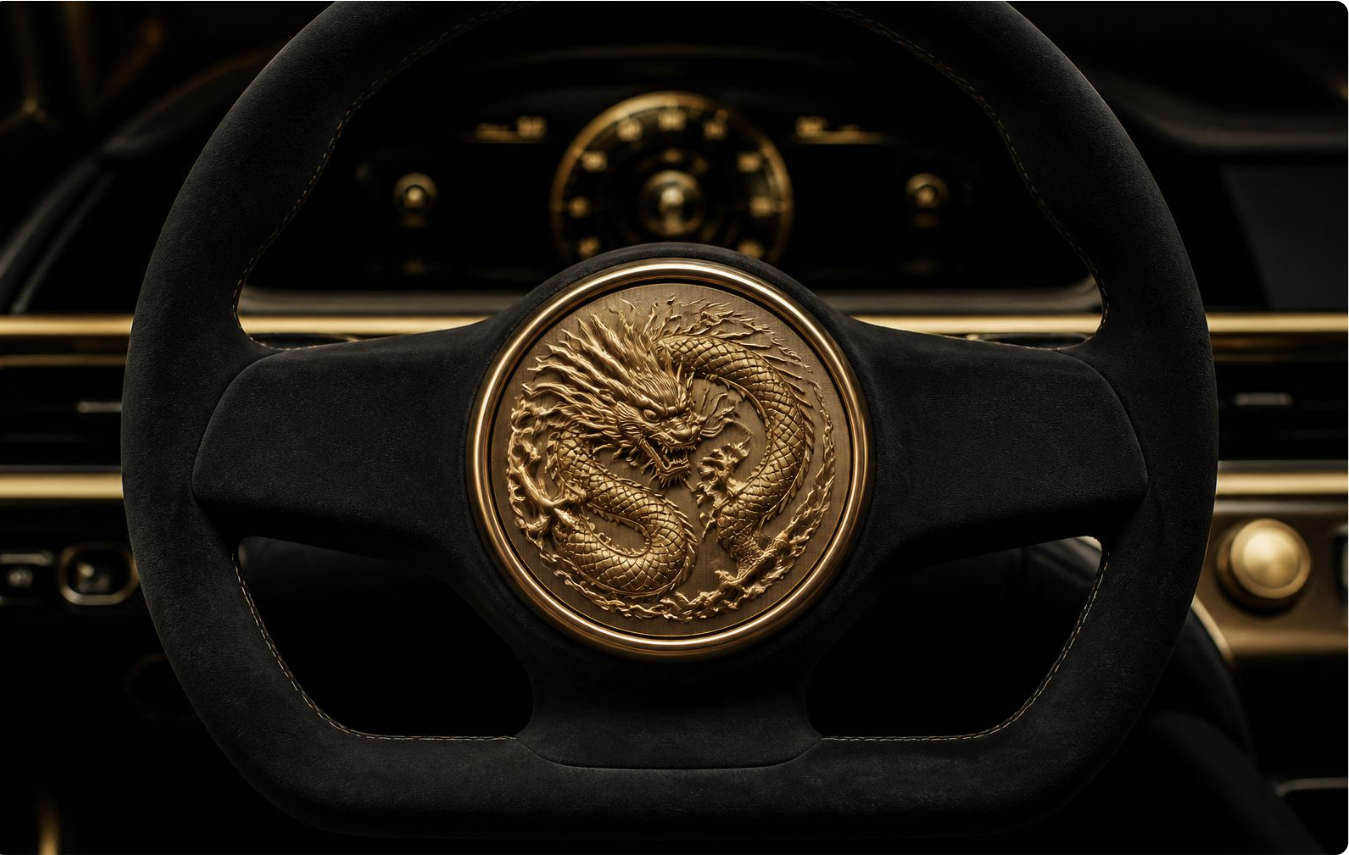
Haptic Steering Wheel.
Wrapped in matte black alcantara with zero raised buttons. Every input lives in the flat horizontal spoke as invisible haptic zones. A single brushed gold medallion, engraved with the Dragon mark, is the only adornment. You feel the car through your hands, not through menus.
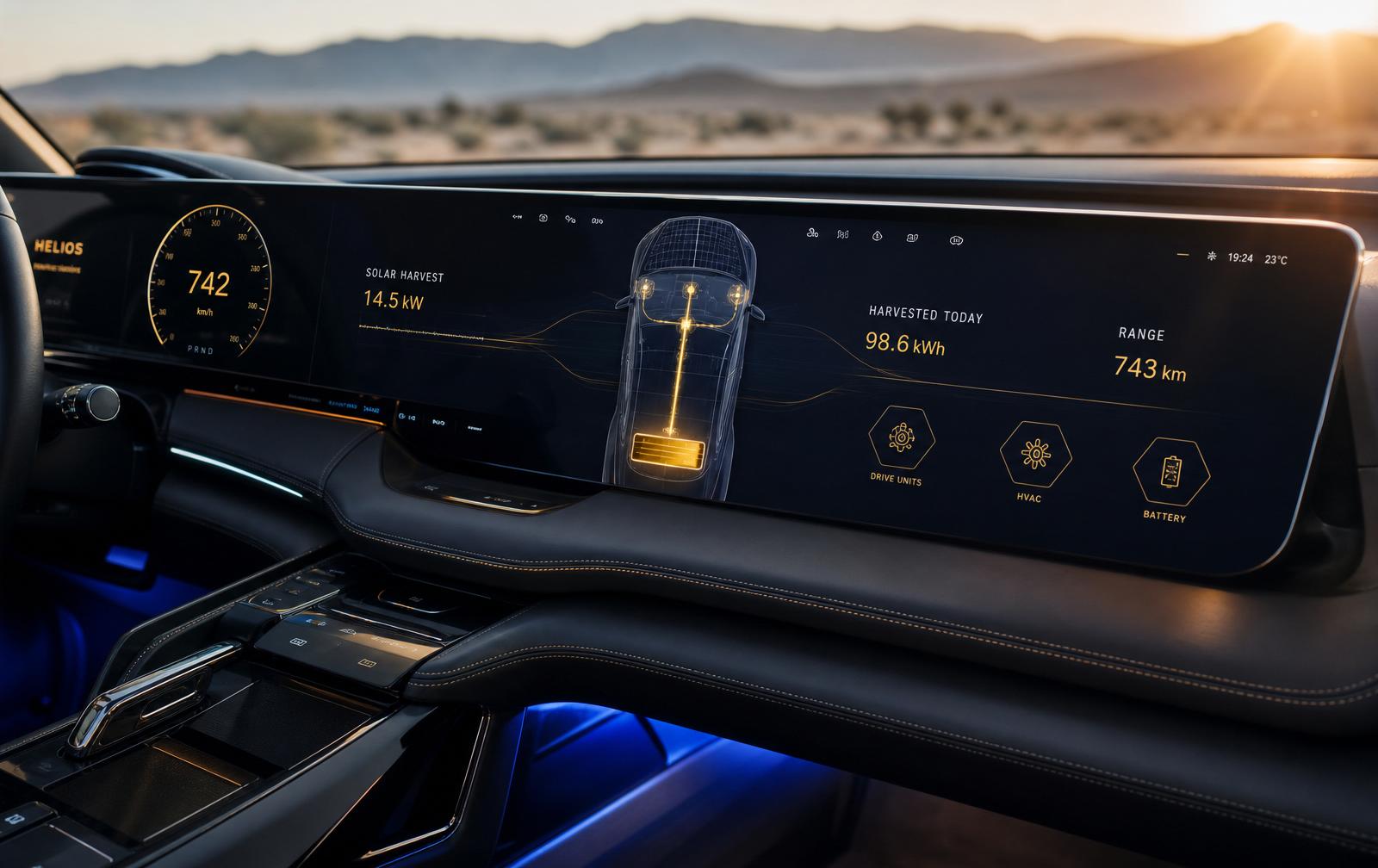
HELIOS Energy UI.
Dark-field interface. Gold vector lines trace power from the solar array through the chassis to the battery in real time. Constellation waypoints replace pin markers. Elevation graphs replace flat maps. Navigation as art.
Solar Light Interior.
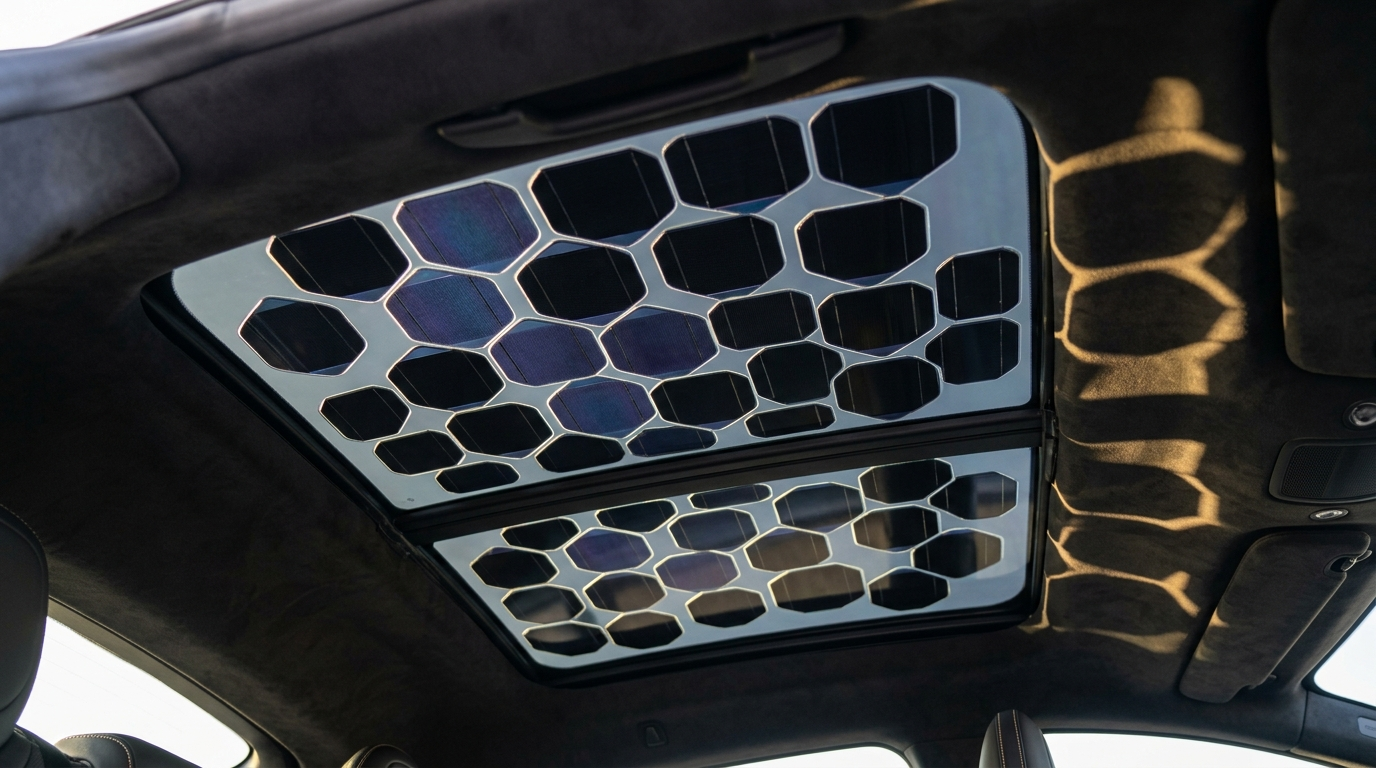
Hexagonal photovoltaic cells in the panoramic roof cast geometric gold light across the matte alcantara headliner as the sun moves. The 10.2 m² array across six zones adds 42 to 55 kilometres of solar-only range per day in full sun, silently, while parked.
Ambient Architecture.
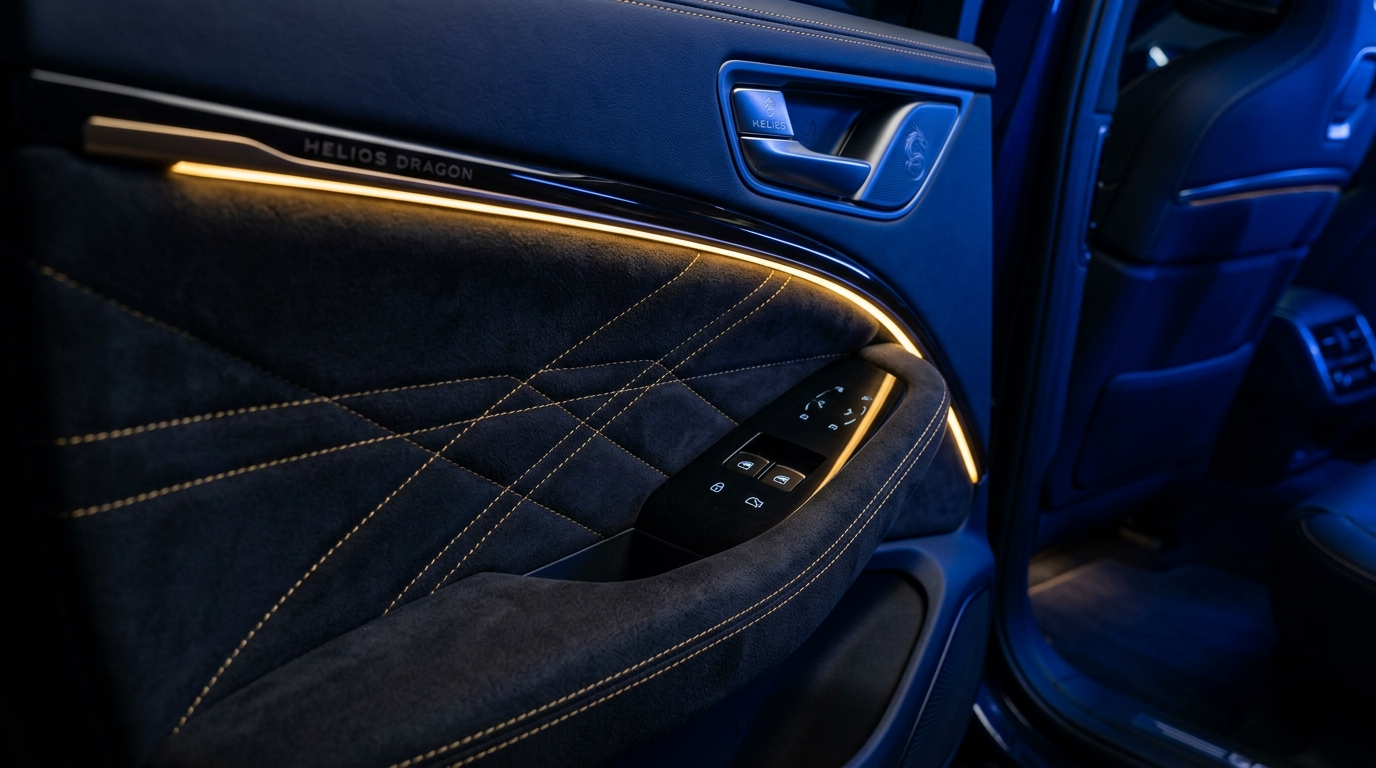
A continuous thin-film LED strip runs the full perimeter of every door panel, pulsing gently through royal blue at night. Sixteen independently programmable zones respond to driving mode, time of day, and occupant biometrics.
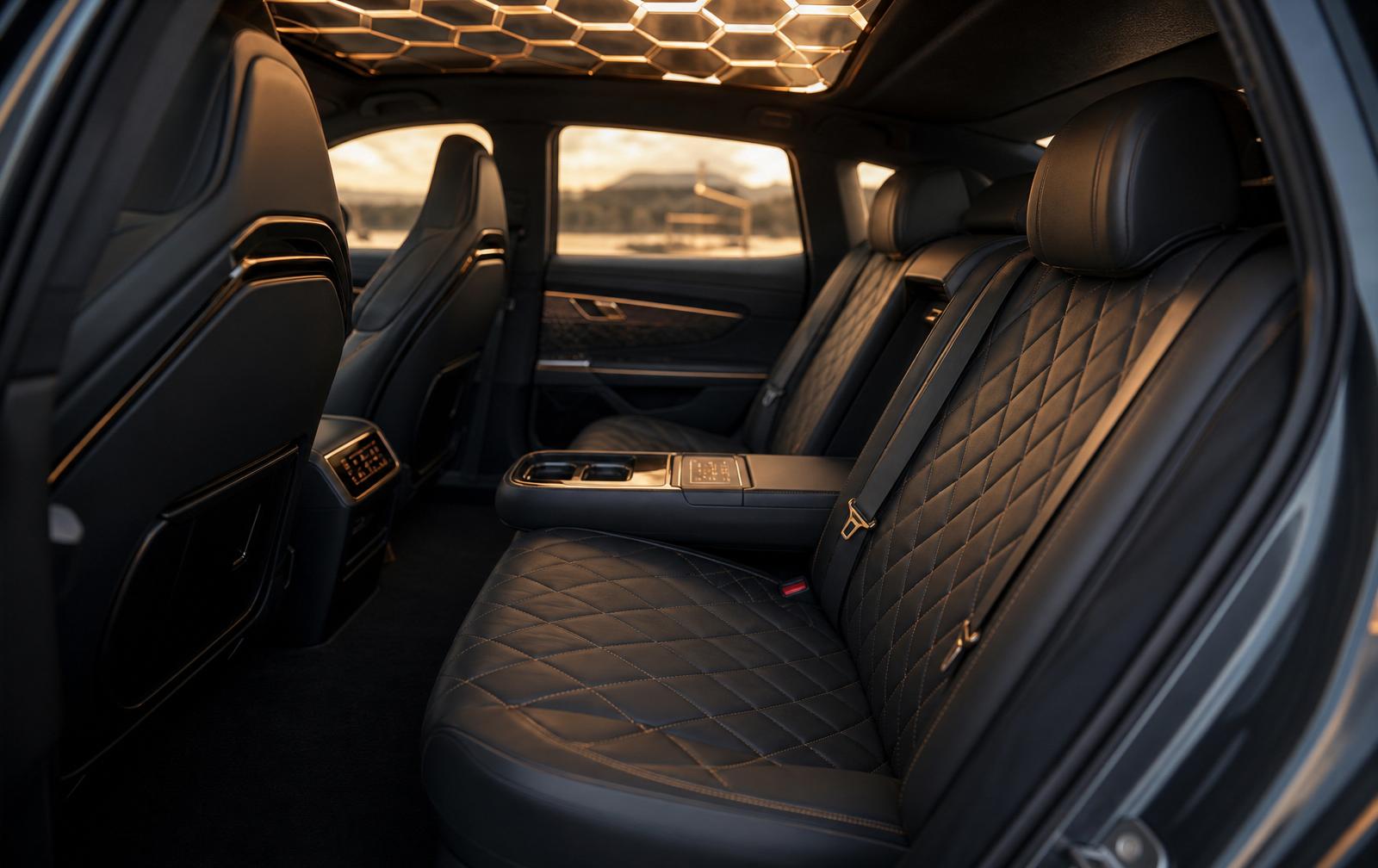
Executive Rear Cabin.
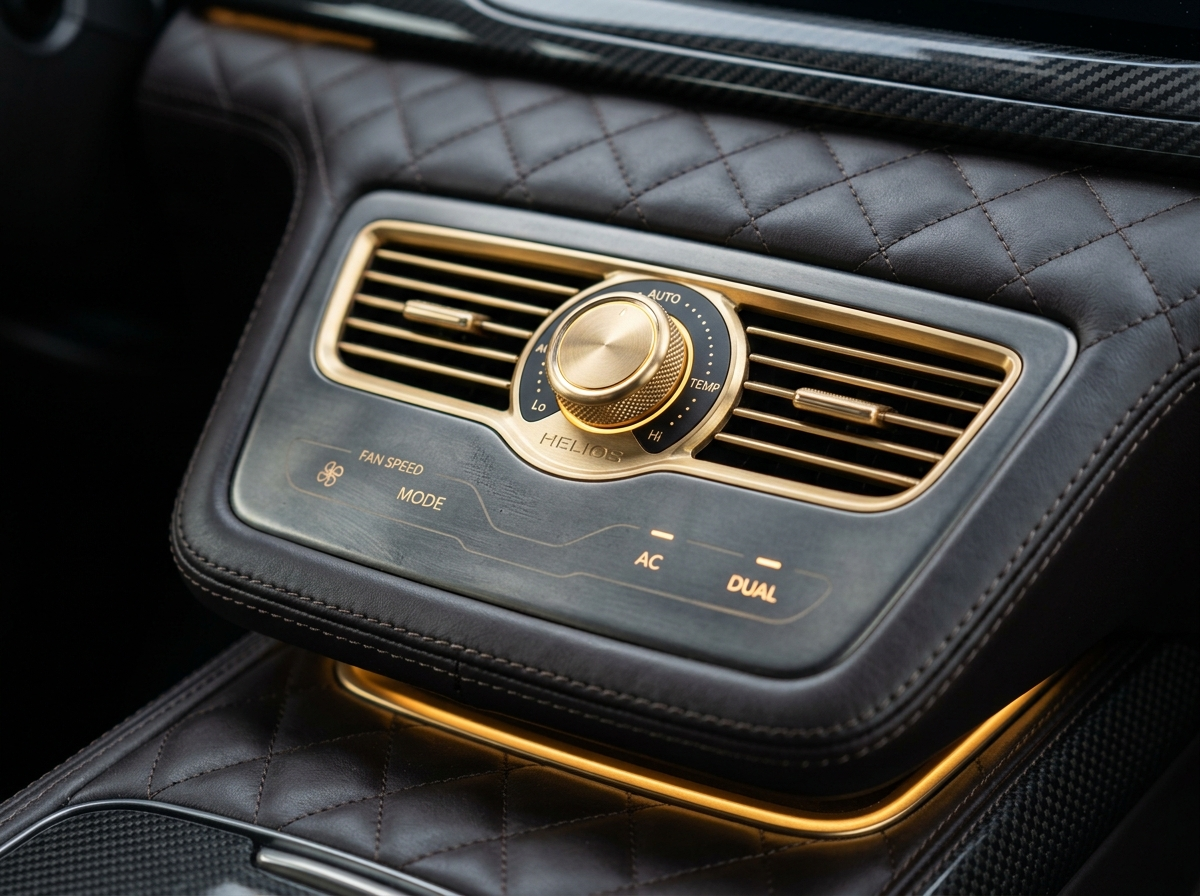
Rear passengers recline in deep quilted nappa leather, each seat independently heated and ventilated to three zones. A floating centre console carries two flush crystal drink holders and a touch-haptic climate panel.
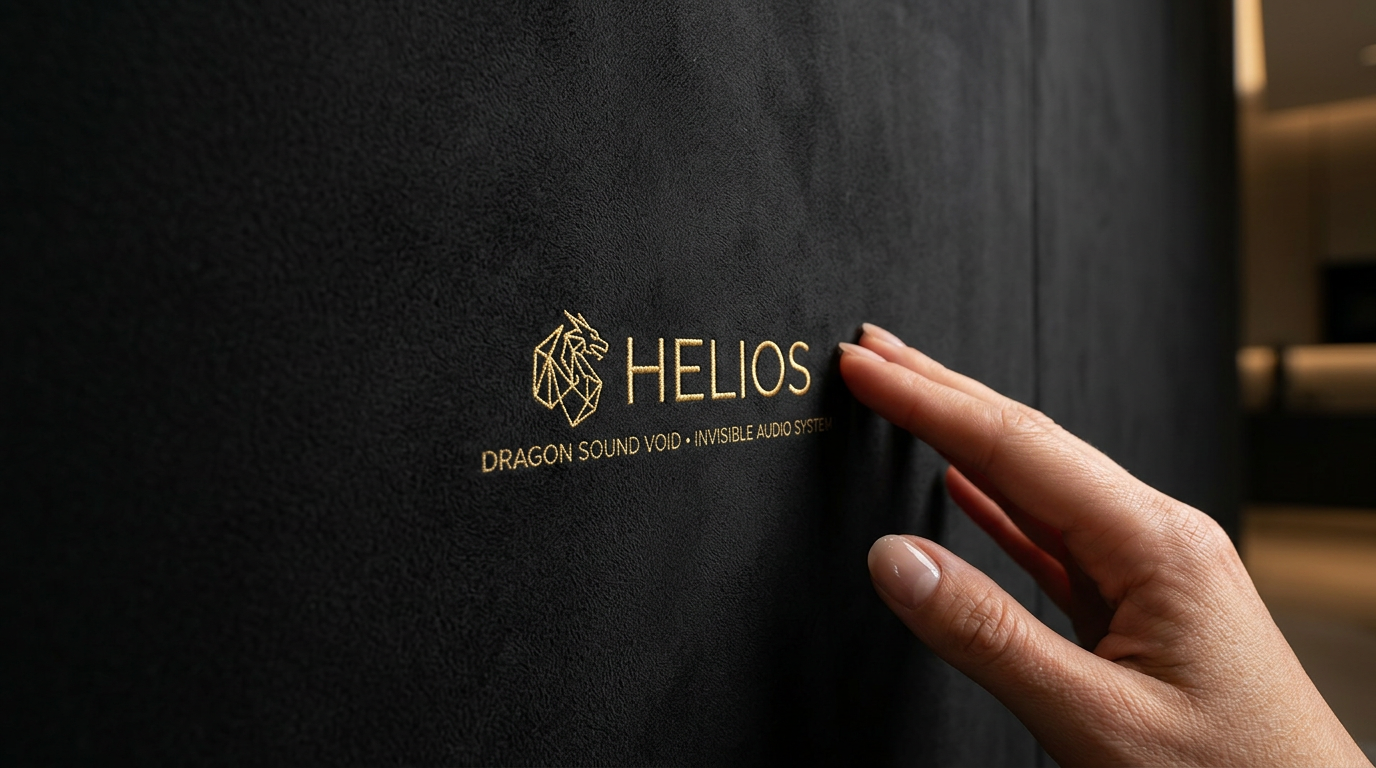
The Sound Void.
32 acoustic transducers are dissolved into the alcantara surfaces with no visible grilles. The sound materialises from the same surfaces you're touching. Complete acoustic transparency during silence. Total immersive presence when music plays.
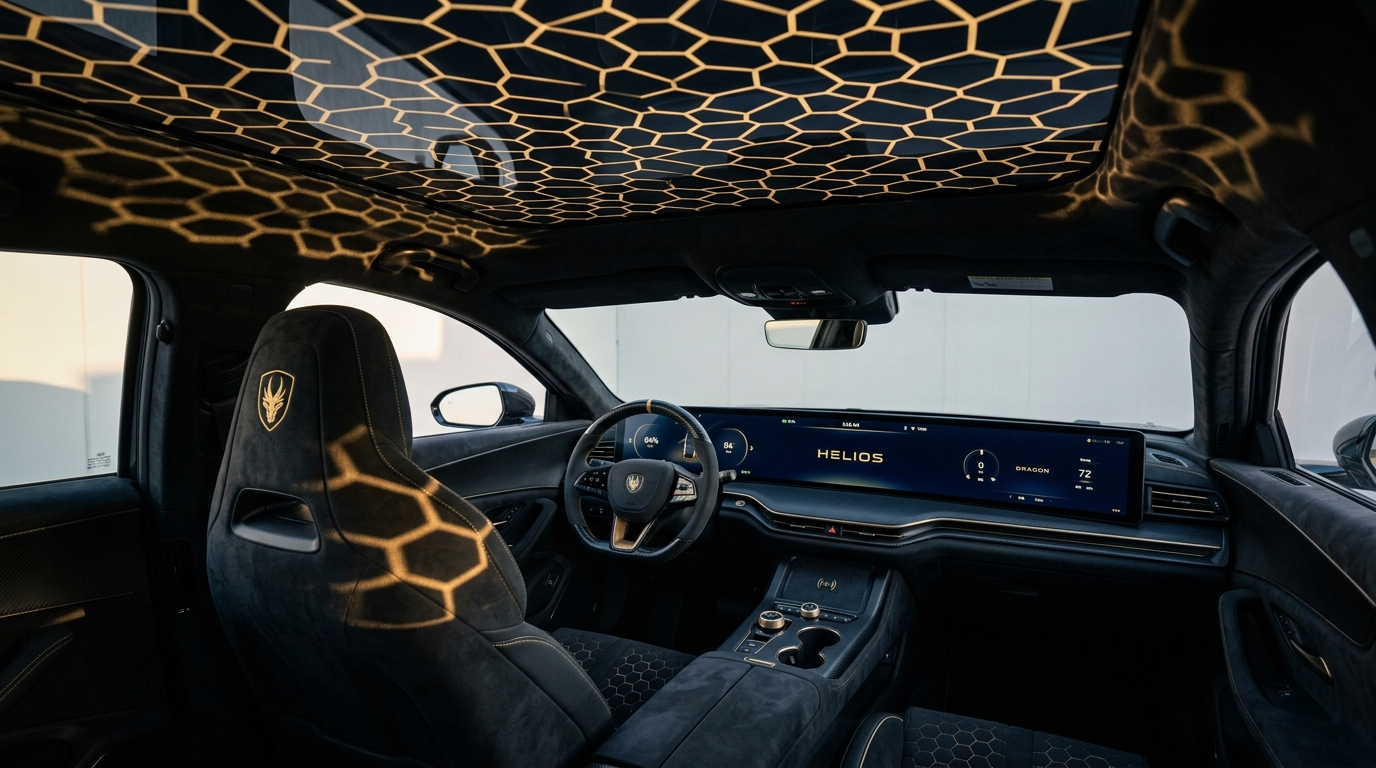
Dawn Through HelioGlass.
At first light, the hexagonal grid of the HelioGlass roof casts geometric gold halos onto the matte alcantara headliner. No artificial lighting. No ambient LEDs. Just solar glass and sunrise. The shadow pattern shifts as the sun moves, a living geometry across the cabin.
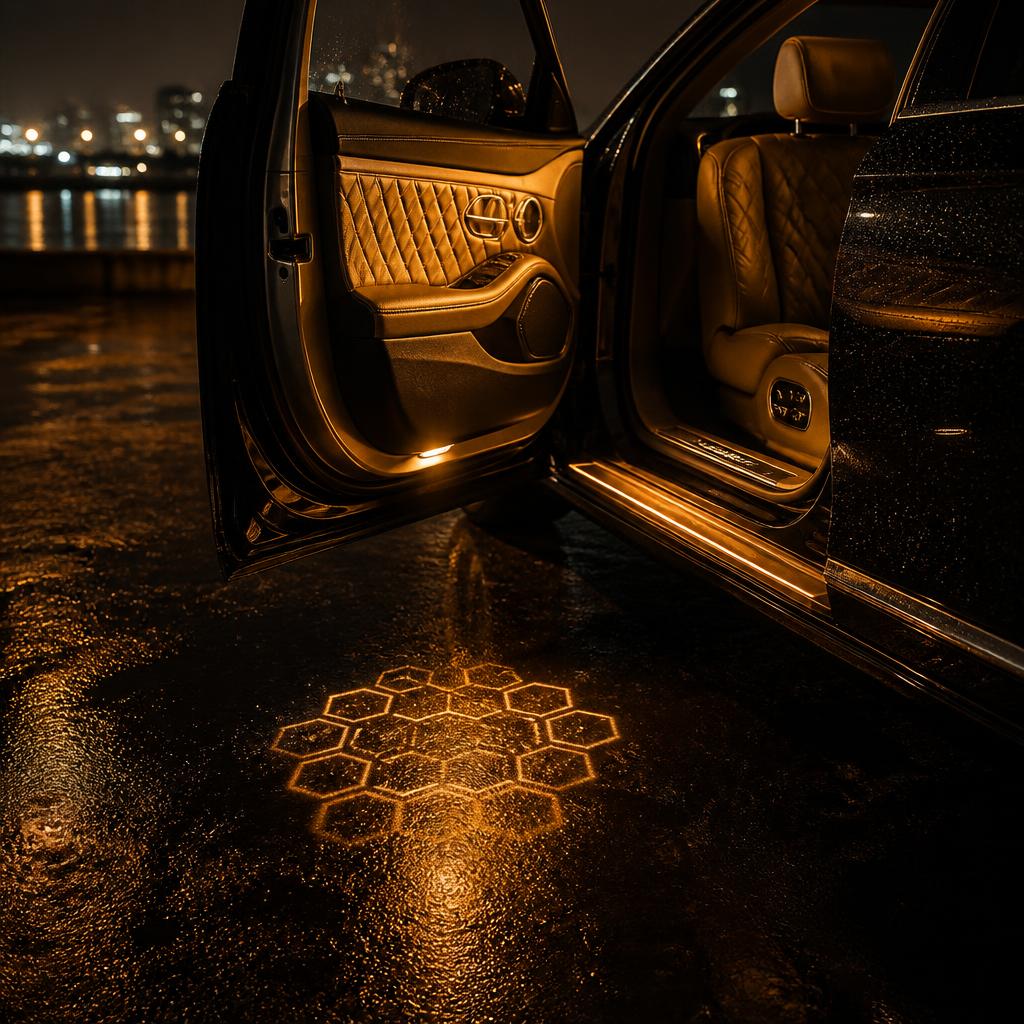
Welcome Sequence.
The Dragon recognises its owner from ten metres. Door handles present themselves flush from the body. A hexagonal HELIOS light projects onto the ground beneath the sill. As you sit, the seat rises, the steering column extends, the mirrors set, every position remembered per driver, recalled in under two seconds.
Solar Harvest State.
Park the Dragon in daylight and the OLED wall transforms into a live energy diagram: photons streaming from the hexagonal roof array through the chassis into the battery silhouette, watts and daily kilometres updating in real time. A quiet dashboard becomes a record of the sun's work.
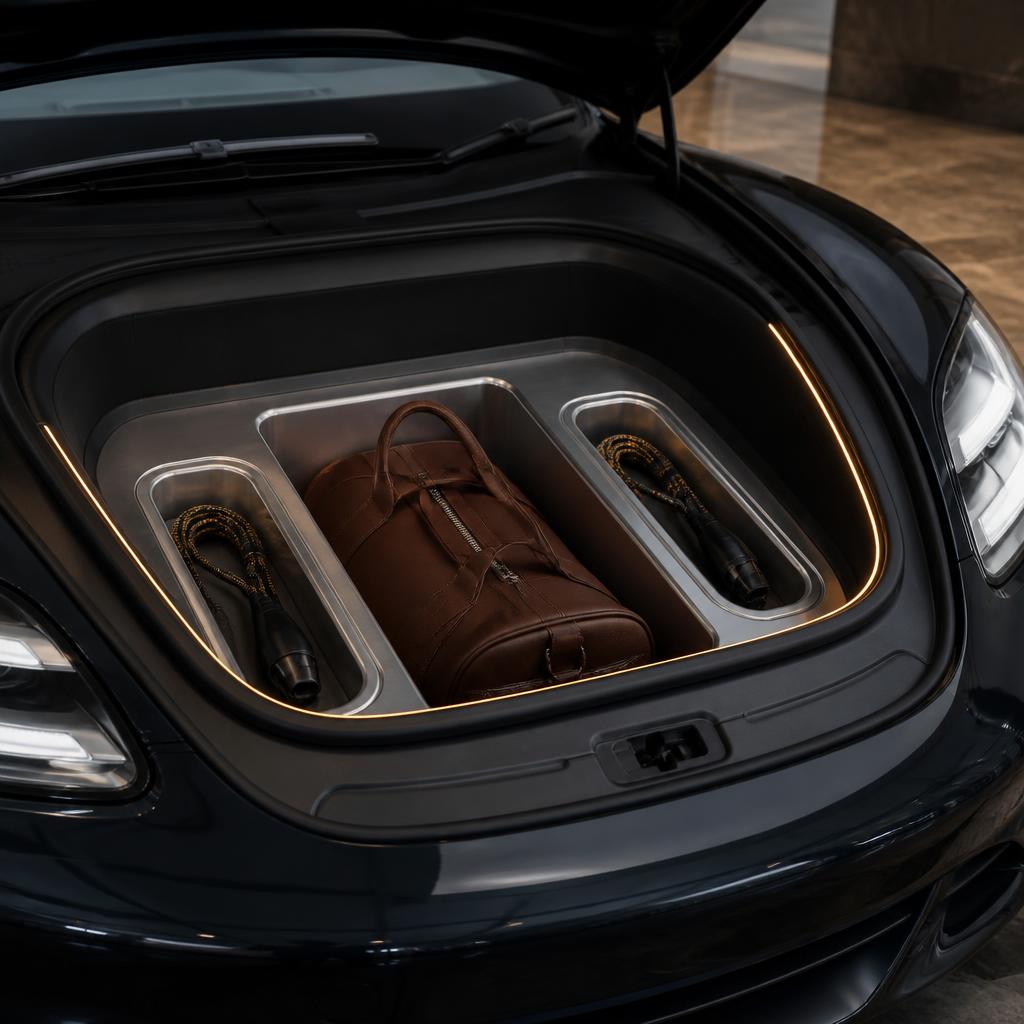
Front Storage.
A 92-litre front compartment sits where a combustion engine would live. Matte-black lined, aerospace-aluminium organiser, two dedicated flush channels for the braided charging cables. Amber-gold perimeter light comes up as the lid rises.
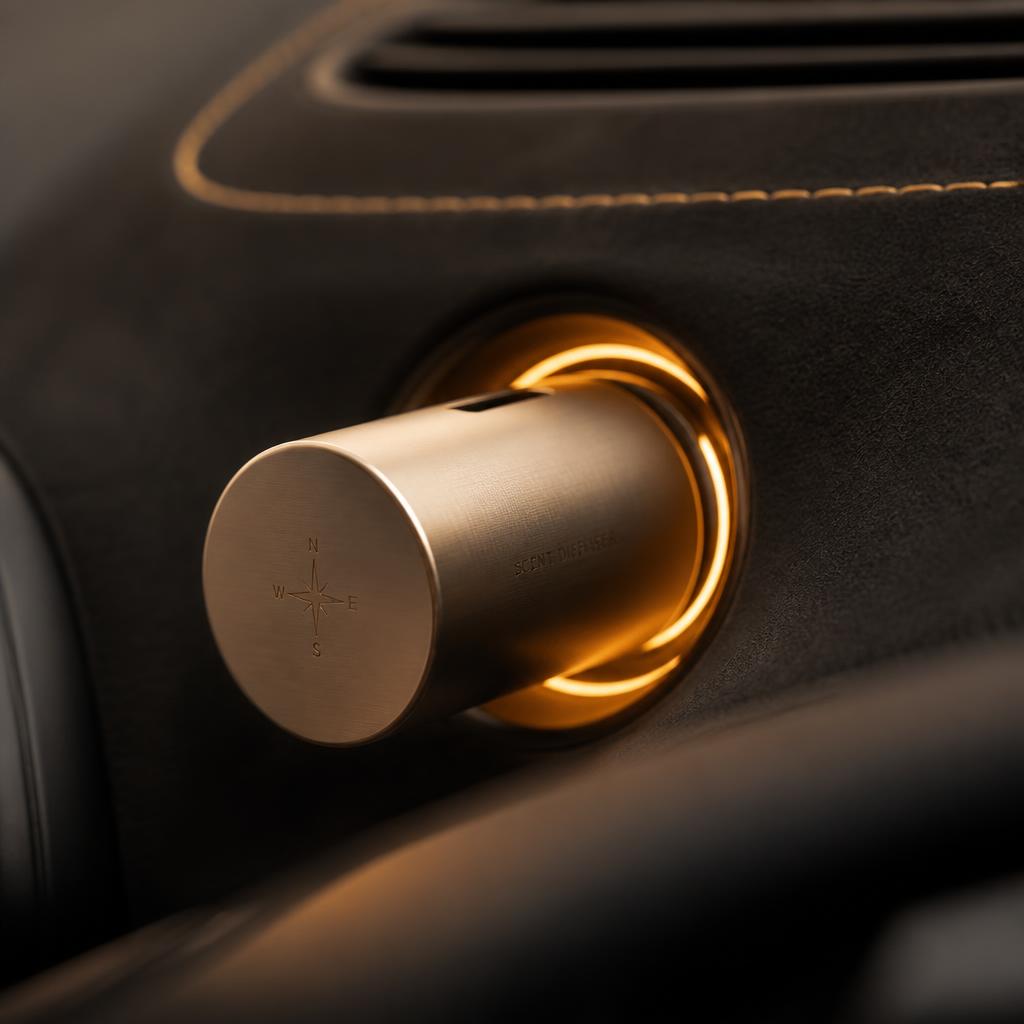
Signature Scent.
A brushed brass cartridge seats into the HVAC intake. Three HELIOS-formulated scents, Alpine Dawn, Salt Grove, Iron Ember, diffuse in micro-doses tuned to drive mode, cabin humidity, and time of day. Refillable, never overpowering, always the same signature the moment the door opens.
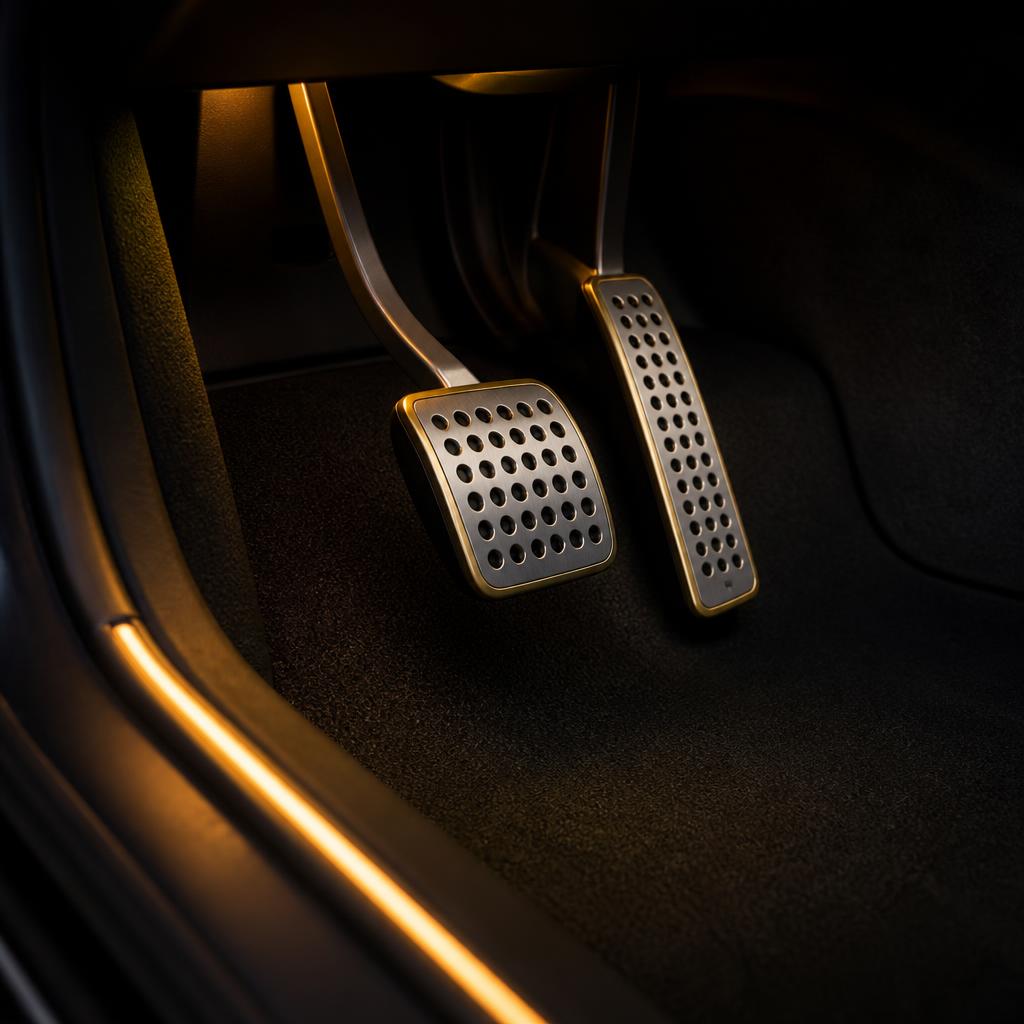
Aviation Pedal Box.
Two floor-hinged pedals machined from a single billet of aerospace aluminium, laser-drilled and coated in a matte anti-slip finish. Travel is calibrated in millimetres. The absence of a third pedal is the point, the balance of the two remaining is precise.
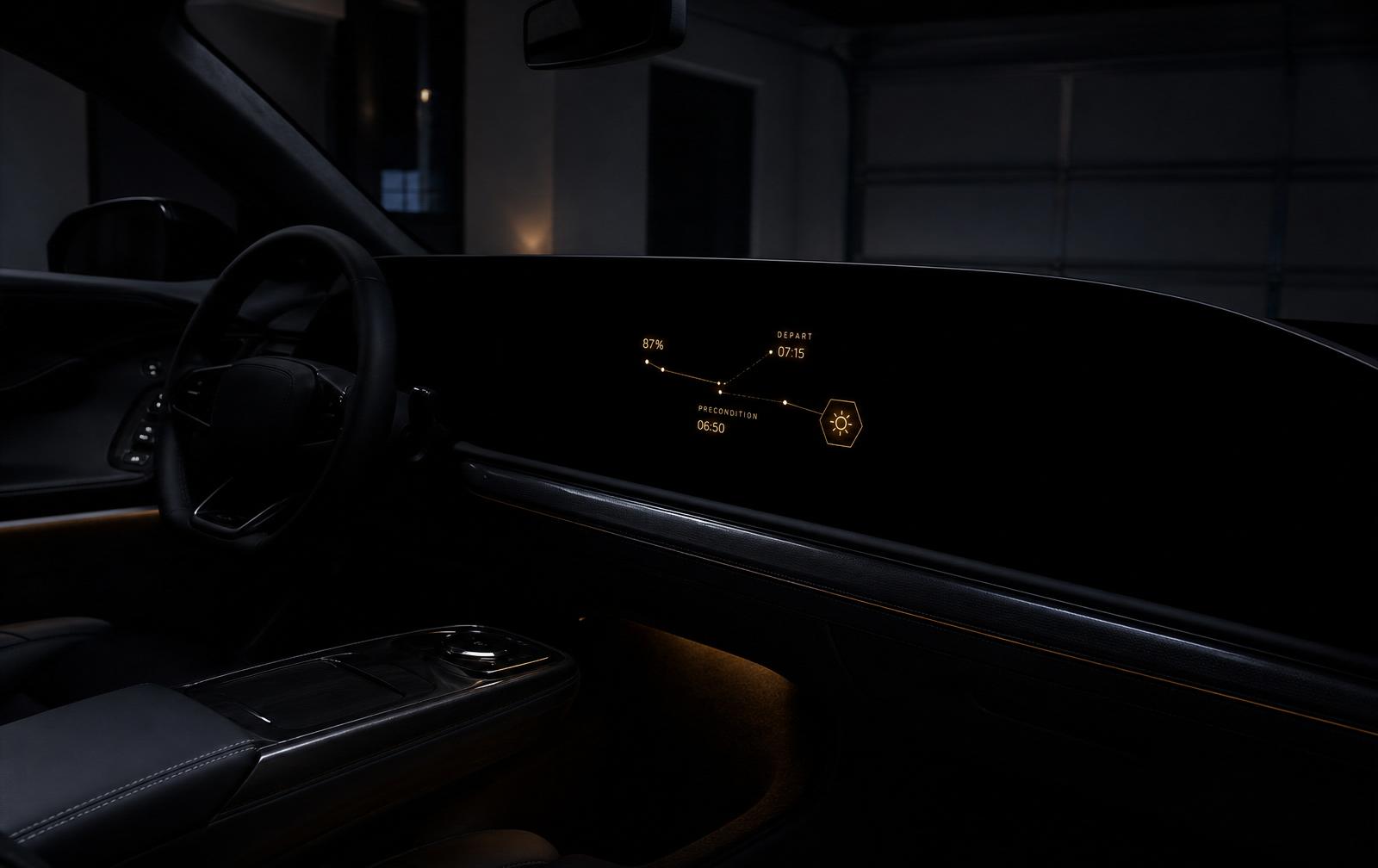
Sleep Mode.
Overnight, the Dragon dims to a single amber-gold constellation across the OLED, battery percentage, next-departure time, scheduled preconditioning. All other systems idle at under three watts. The cabin waits, quiet, until first light returns to the roof.
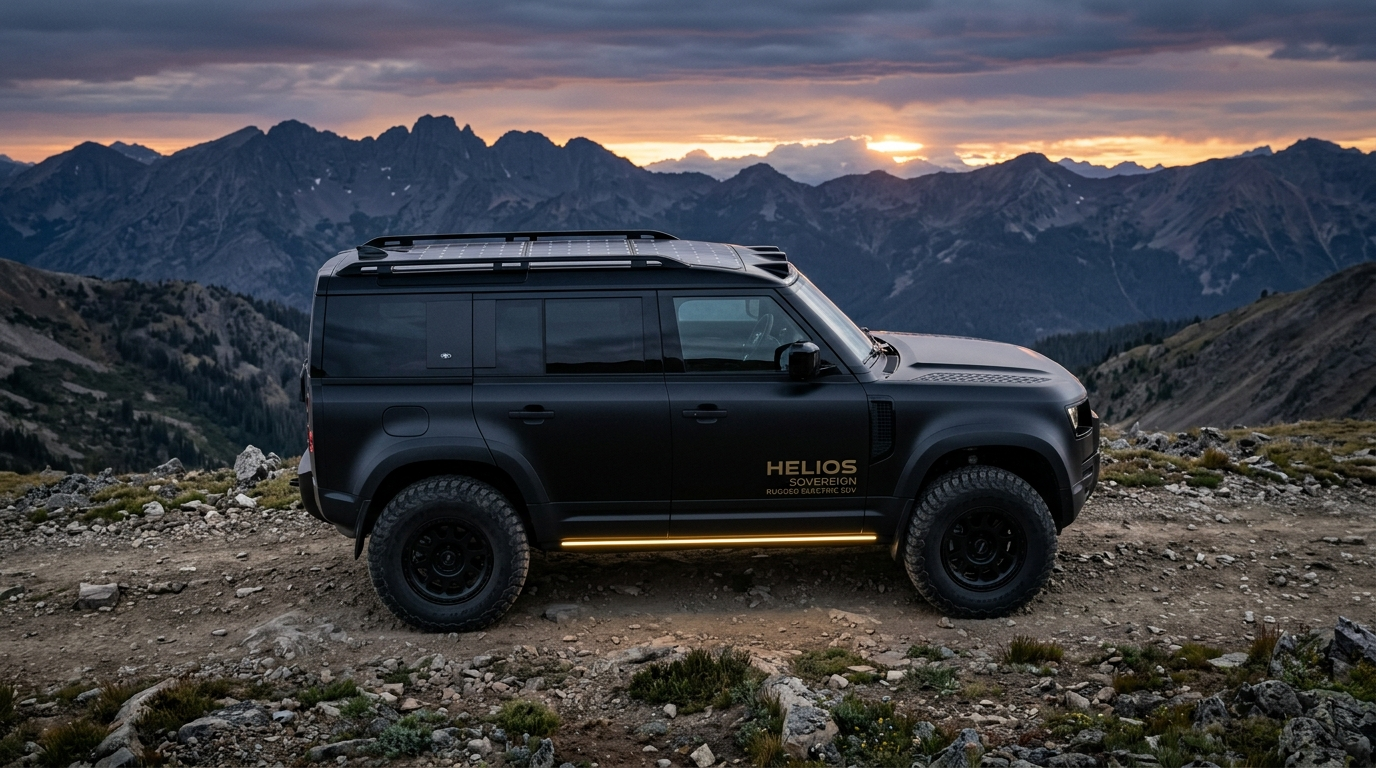
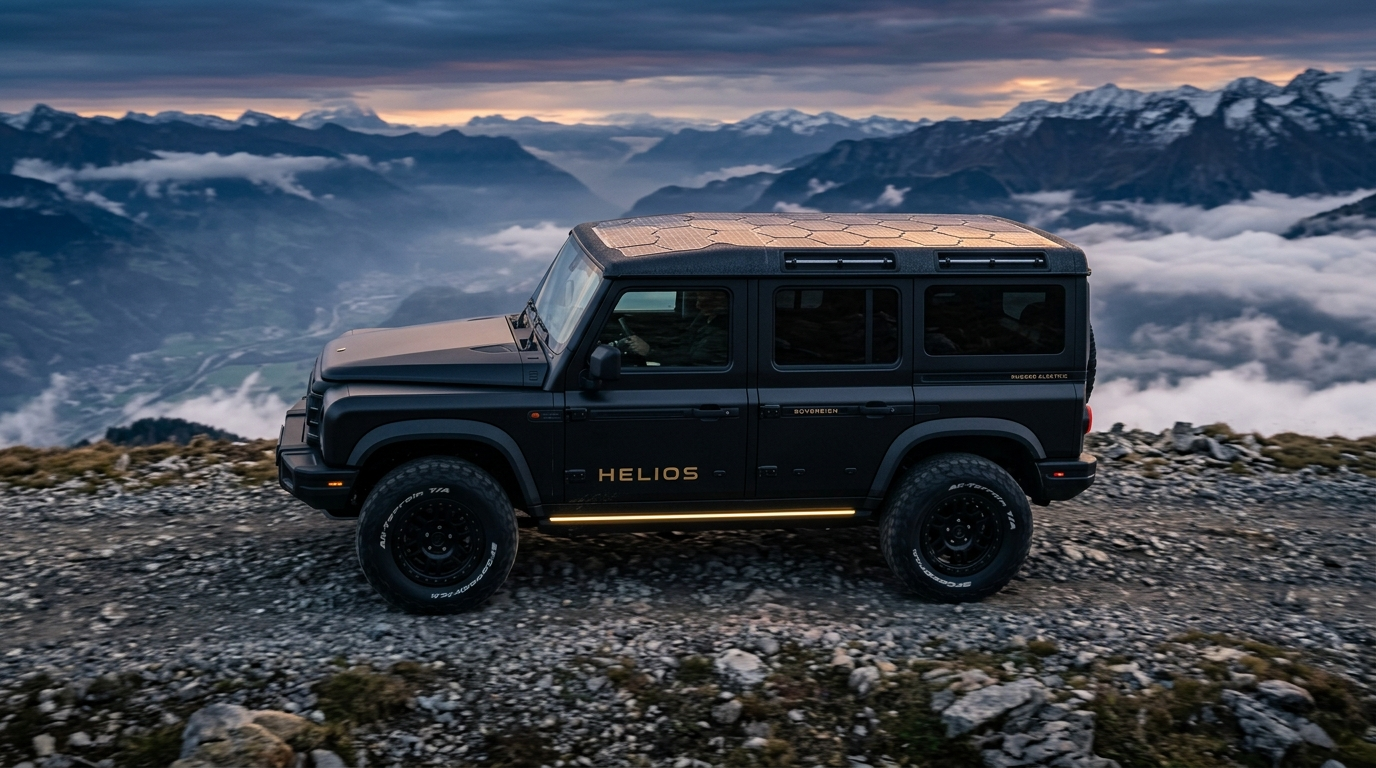
02, All-Terrain Solar SUV
Command every terrain.
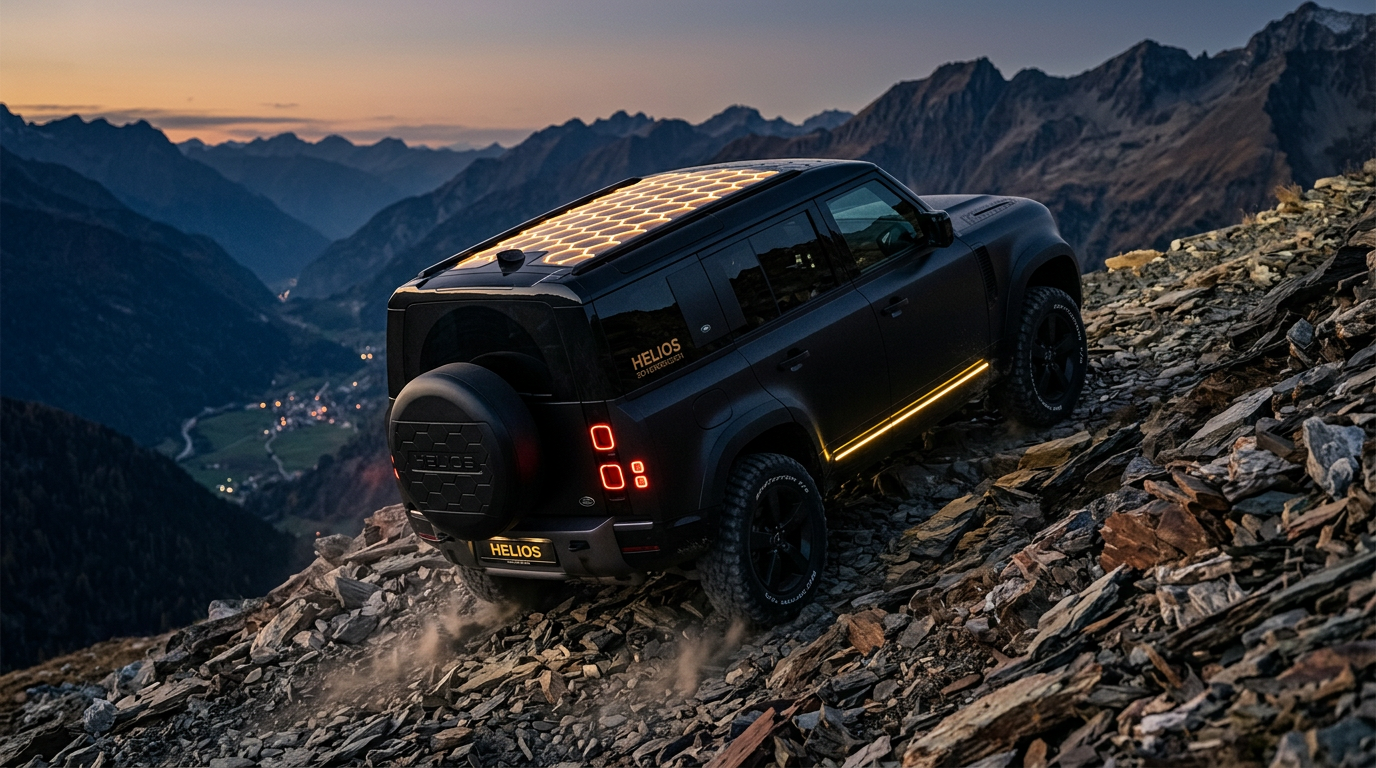
Architectural, upright, unflinching. The Sovereign carries its photovoltaic roof like a crown, engineered to roam where charging cannot follow.

Specifications are target figures for pre-production vehicles and are subject to change. Range figures are WLTP estimates. Solar harvest and solar-only range figures are calculated at the stated panel efficiency under full-sun conditions and vary with climate, season, orientation and use.
The Command Suite.
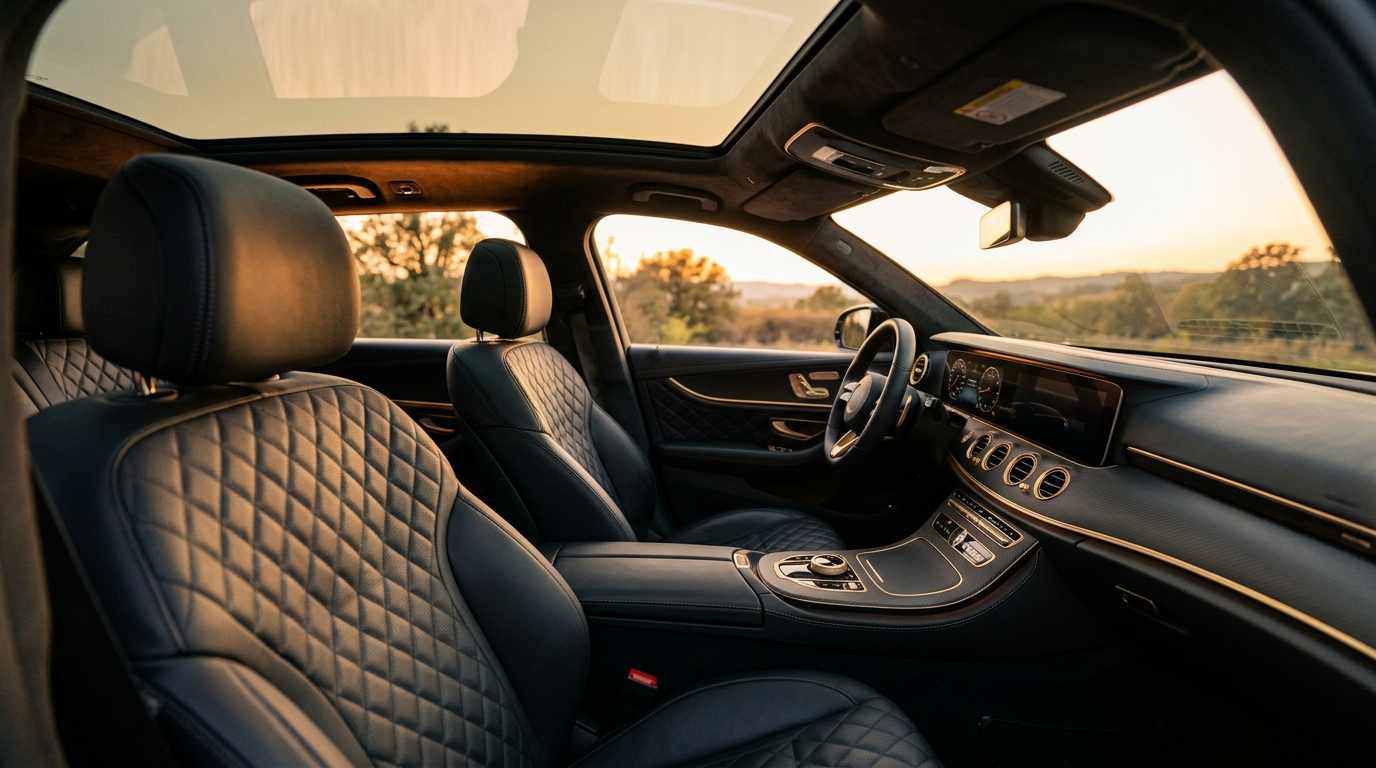
The elevated driver position is intentional. You sit high, commanding a clear horizon through the panoramic solar glass.
Command Cabin.
The elevated driver position is intentional. You sit high, commanding a clear horizon through the panoramic solar glass. Quilted obsidian nappa leather wraps every seat. The centre console rises like a monolith between the front seats.
Topographic Navigation.
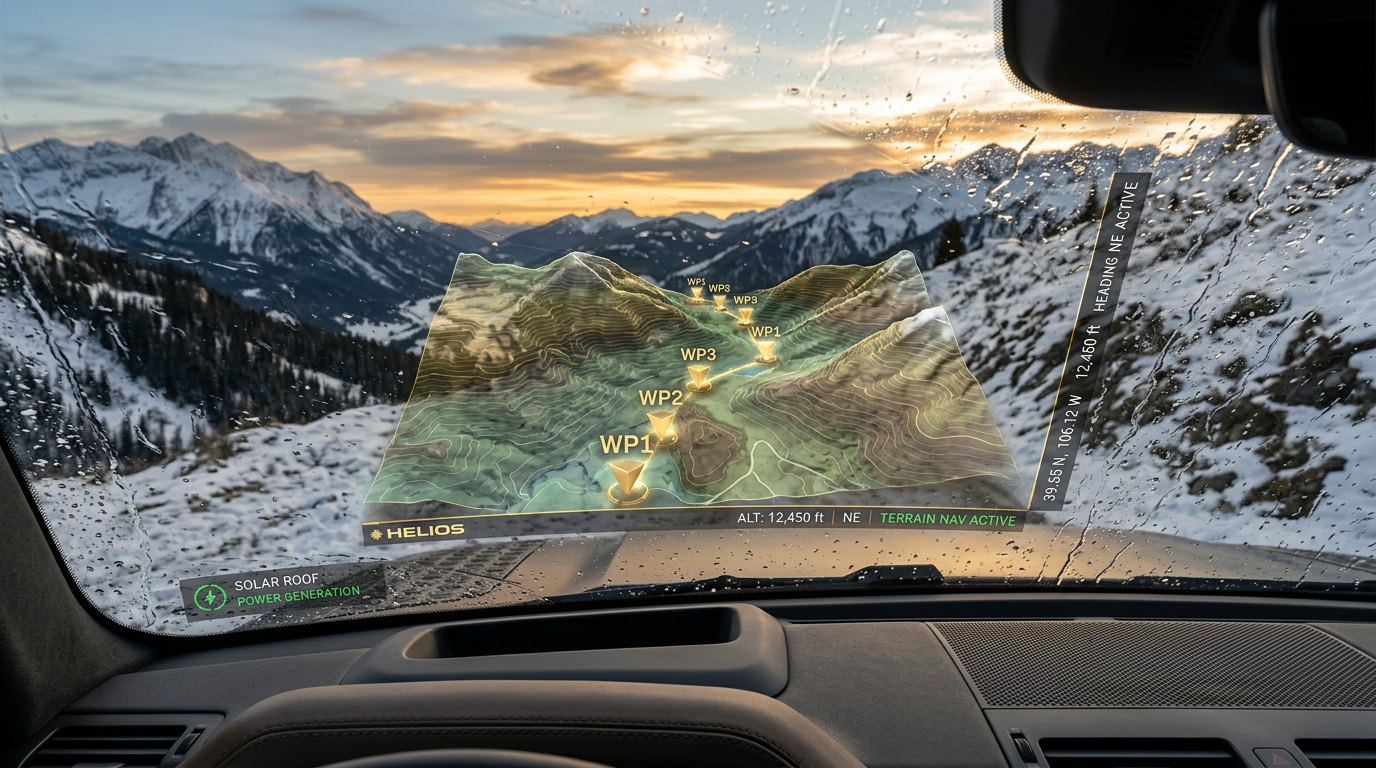
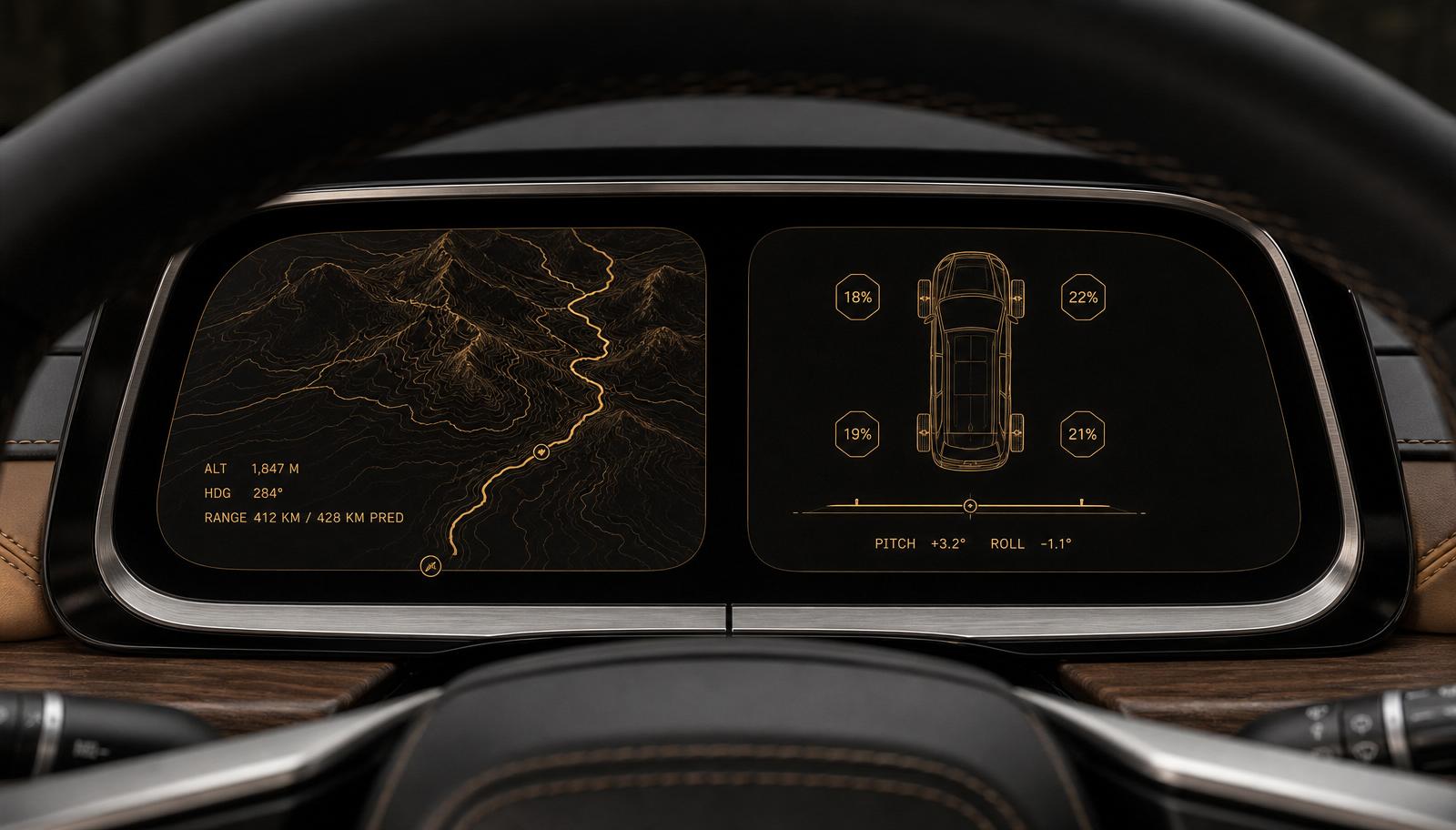
The navigation system renders terrain in 3D topographic relief. Mountains, ridgelines and valleys shown as dark contour maps with a single gold route line threading through. Battery range predictions adapt in real time as elevation changes.

Terrain Suspension.
The adaptive air suspension reads the terrain 500 times per second. At highway speed it glides on 70mm of air cushion. On the mountain trail, it raises 75mm and shifts load to individual corners, each wheel independently articulated to maintain traction across loose shale, mud, or snow.
Tri-Zone Air Architecture.
Three independently controlled climate zones maintain precision to within 0.5 degrees per occupant area. Ultra-fine air filtration removes 99.97% of PM2.5 particles, the same standard as a hospital operating theatre.
Aerospace Solar Cell.
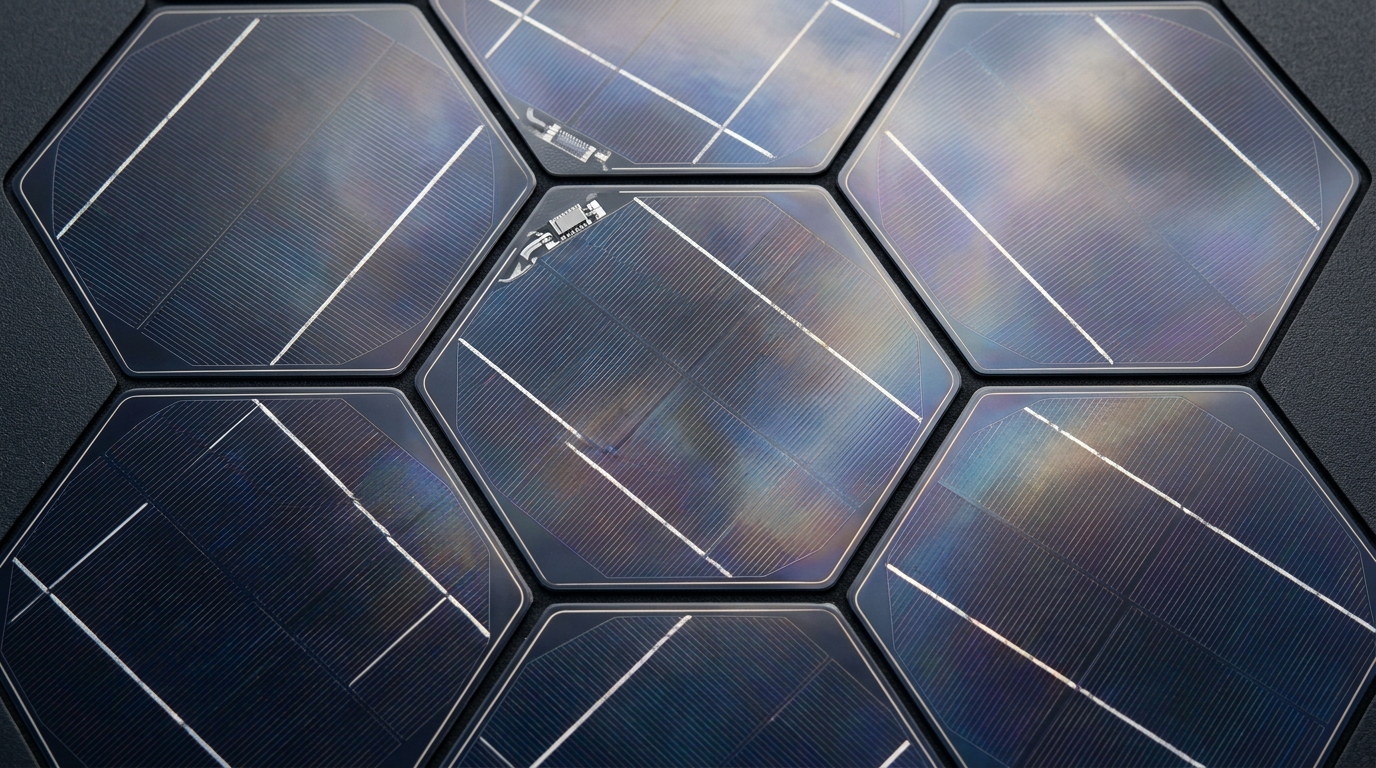
Each hexagonal solar cell is flush with the body panel surface to a tolerance of 0.2mm. The iridescent obsidian surface shifts from deep black to blue-purple to gold as light angle changes. Efficiency meets material beauty.
The Command Suite.
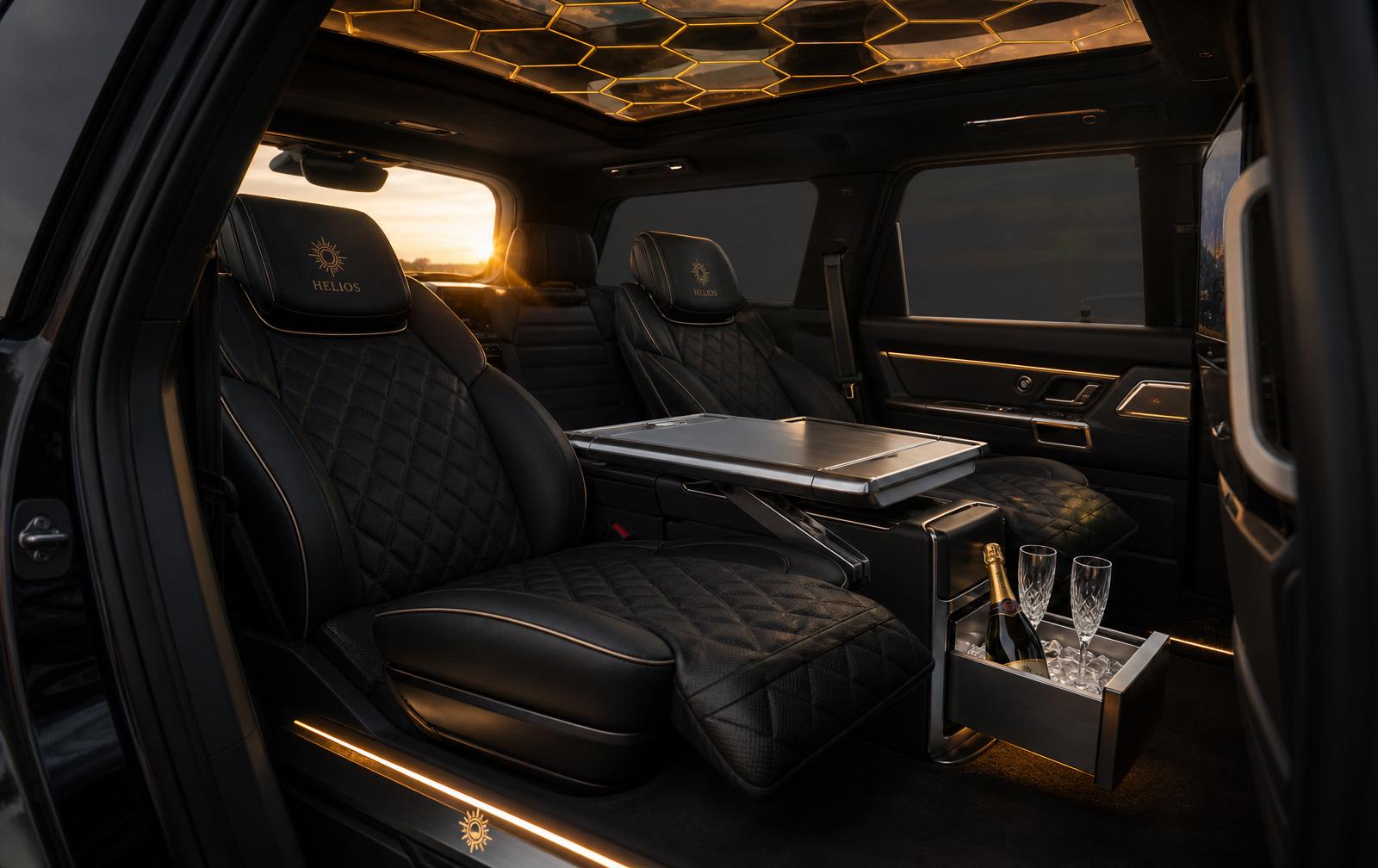
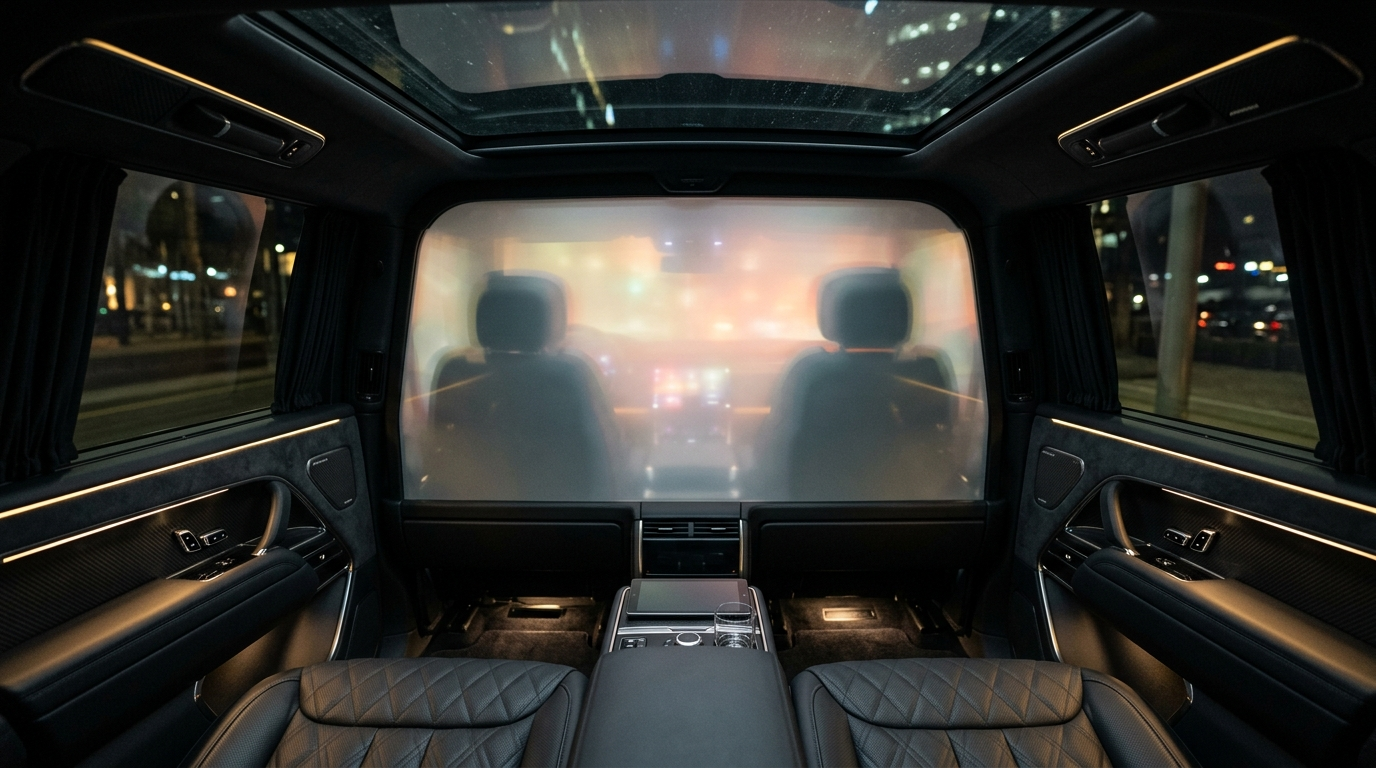
Rear captain seats recline to 138° zero-gravity with 12-point massage. An 8-litre climate-controlled chiller holds champagne at −2°C or green tea at 50°C. The aerospace-aluminium executive surface emerges from the console at any angle. One touch activates PDLC privacy glass, transforming the rear cabin into a private suite in 0.3 seconds.
The Privacy Suite.
One touch activates the PDLC smart glass partition behind the B-pillar. In 0.3 seconds, the rear cabin becomes a frosted private room, the partition glowing faintly with city light from outside, like a shoji screen lit from behind. Same car. Same journey. Different world.
Topographic Command Cluster.
Twin 12.3-inch displays render terrain as amber-gold contour relief. Left cluster shows elevation, heading, and predicted range against actual. Right cluster shows drivetrain articulation, pitch, roll, live per-wheel load. Numbers a mountaineer would recognise, drawn in the vocabulary of a survey map.
Expedition Tailgate.
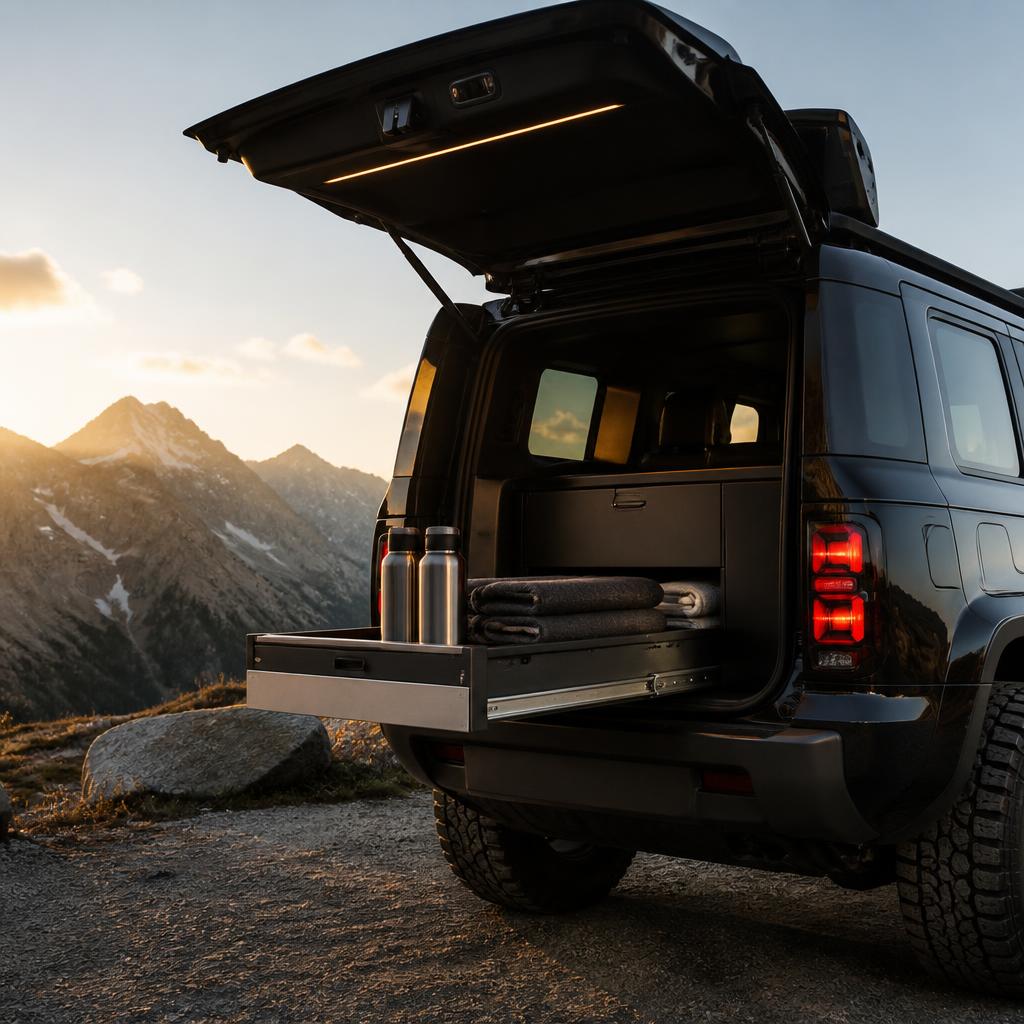
The powered tailgate opens to reveal a slide-out aerospace-aluminium drawer, integrated thermos cradle, folded merino blankets, and a warm amber-gold LED strip along the underside of the hatch. Loads or hosts equally. A base camp that arrived at 130 km/h.
Portal Entry.
The Sovereign's doors are electrically actuated. A single haptic press on the flush handle and the door swings open at a controlled 40°, an integrated running board deploys from beneath the sill, and the seat lowers 60 mm to meet you. Climb in, don't step up.
Alpine Scent System.
The Sovereign's brass diffuser carries three altitude-inspired signatures, Pine Ridge, Glacier Air, Woodsmoke, micro-dosed through the tri-zone HVAC. Cold-weather intensity rises automatically when cabin temperature drops. The car smells the way the drive feels.
Bio-Sourced Wood Inlay.
A single ribbon of reclaimed Alpine spruce runs the full width of the dashboard, finished with a matte hardwax oil rather than lacquer. Every panel is unique, pattern, grain, the traces of a tree that stood at altitude. FSC-certified, chain-of-custody documented, delivered with the vehicle.
Off-Grid Power Export.
A dedicated bi-directional port under the rear quarter delivers up to 9.6 kW of household AC to a campsite, a workshop, or a home in blackout. The Sovereign carries roughly three days of average household draw and refills itself in daylight. A vehicle that gives back to the grid it left behind.
03, Solar Performance Coupé
Built for the perfect lap.
Low, taut, predatory. The Phantom is HELIOS at its most disciplined, a coupé that treats the horizon as a personal matter.


Specifications are target figures for pre-production vehicles and are subject to change. Range figures are WLTP estimates. Solar harvest and solar-only range figures are calculated at the stated panel efficiency under full-sun conditions and vary with climate, season, orientation and use.
The Darkness Standard.
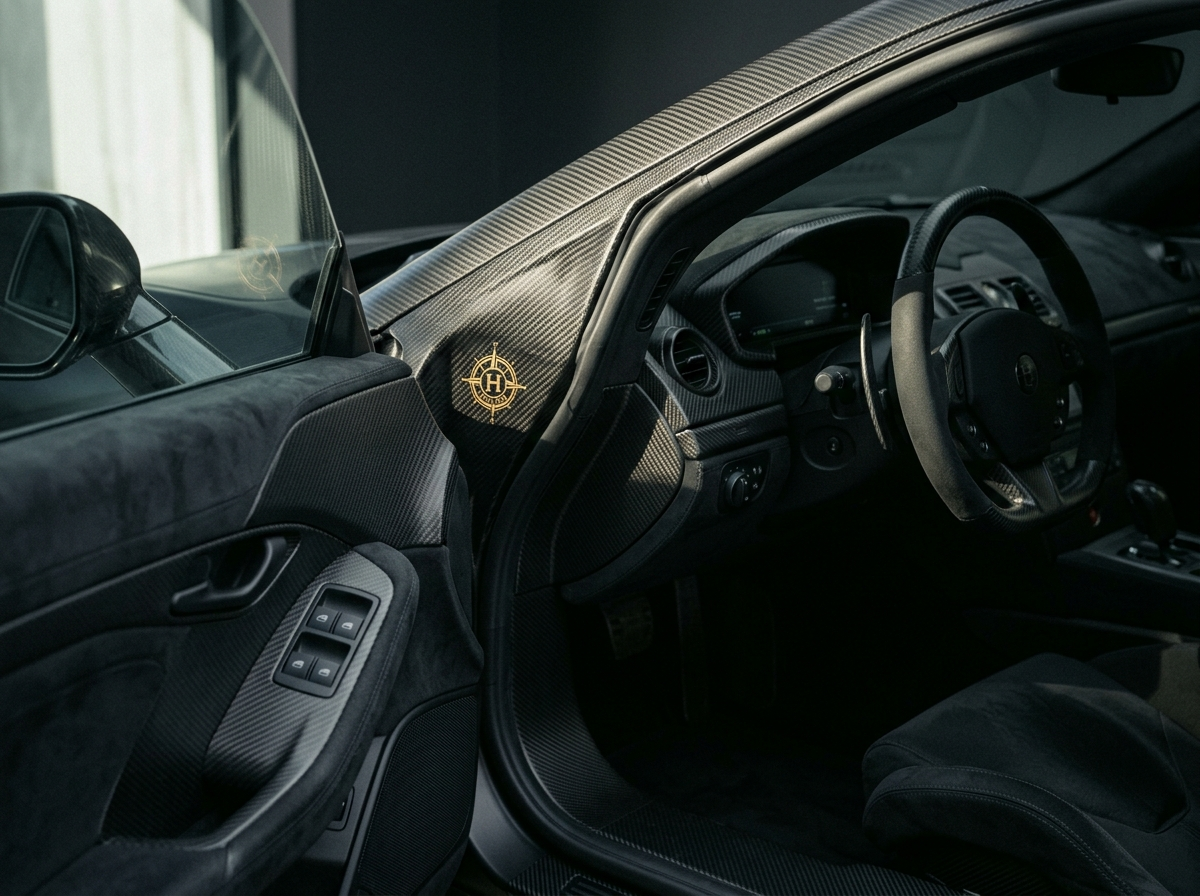
Raw carbon fibre from sill to roof. A single inlaid gold compass mark. Everything else is alcantara and speed.
Carbon Architecture.
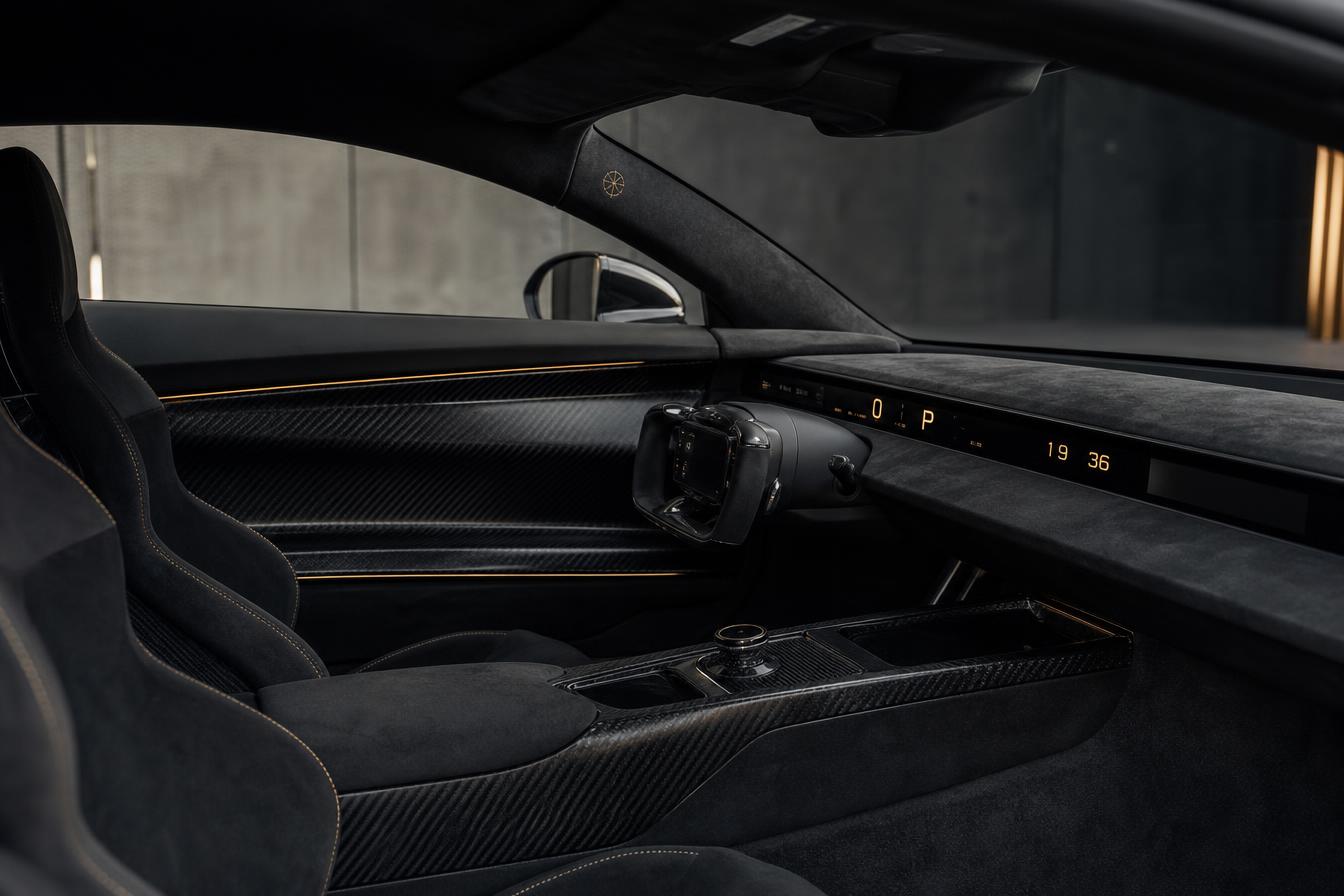
Raw exposed carbon fibre covers every interior wall from sill to roof. The dry-weave surface is finished in a thin clear coat that reveals the underlying structure under raking light. A single inlaid gold compass mark sits at the base of the A-pillar.
FIA-Grade Bucket Seat.
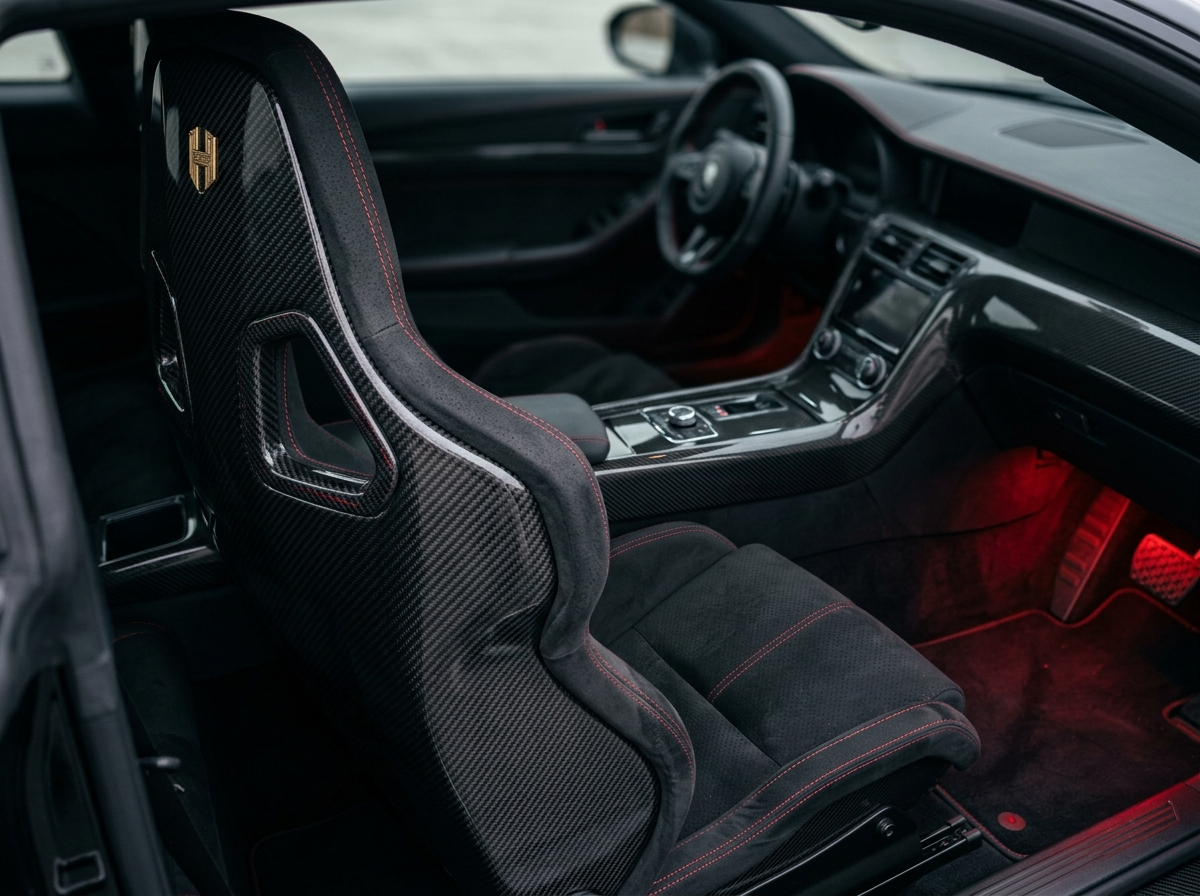
The Phantom seat shell is raw carbon fibre. Matte black alcantara covers only the seating surfaces. Deep side bolsters hold the driver at lateral G-forces that would unseat a conventional seat.
Horizontal OLED Bar.
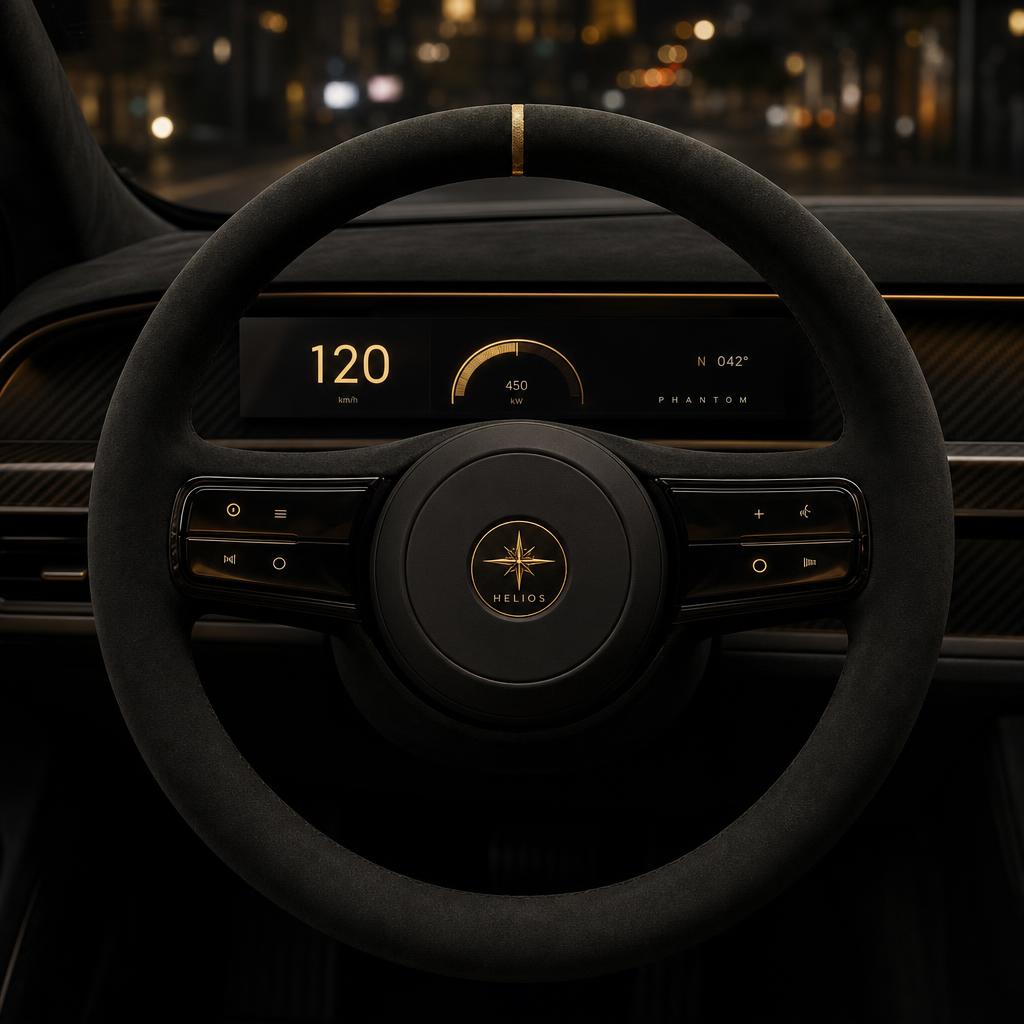
A single horizontal OLED bar spans the full width of the Phantom dashboard. No circular dials, no bezel. Speed in restrained gold numerals on the left, a thin gold power arc at centre, a compass bearing at the upper right. At night, it is the only source of light in the cabin.
Windshield HUD.
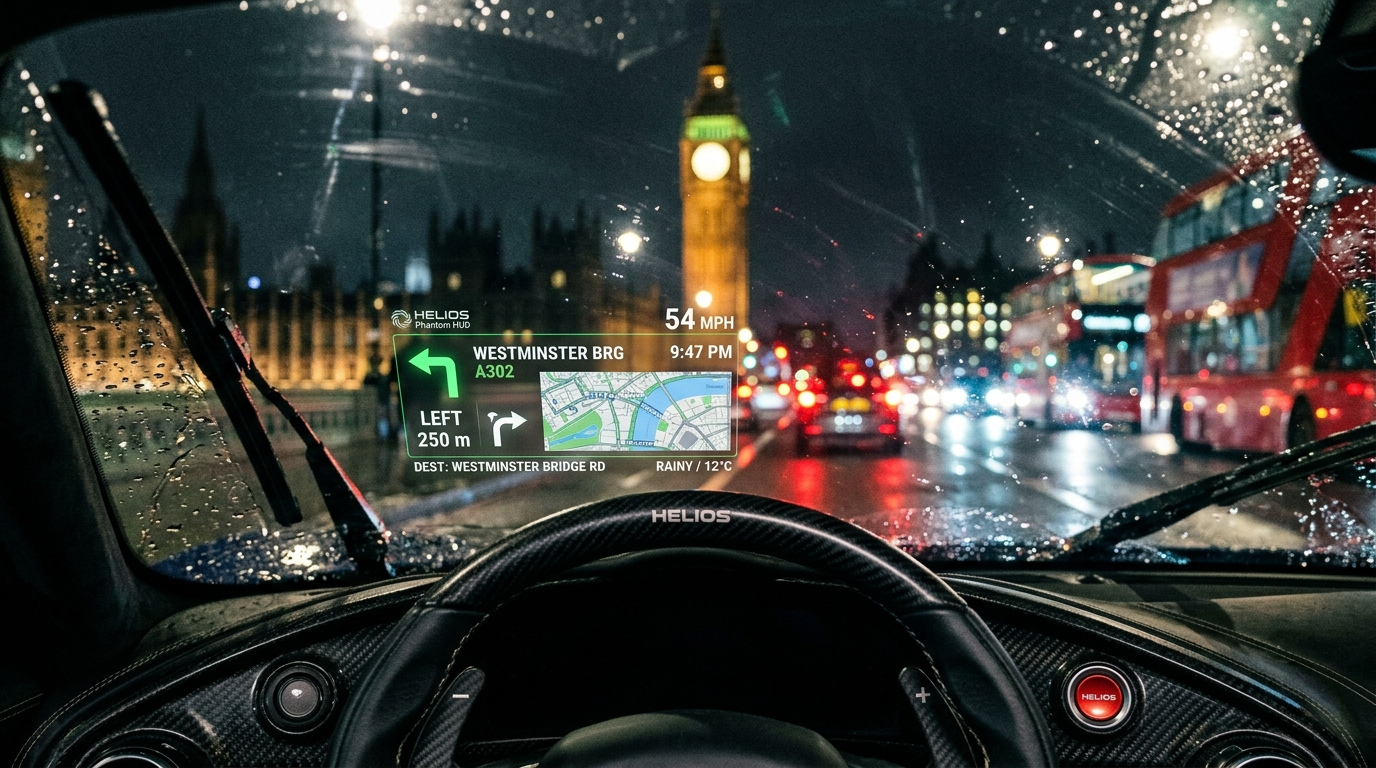
The heads-up display projects directly onto the windshield glass in translucent gold. Speed. One navigation arrow. Nothing else. At 200km/h on a coastal road at dusk, the gold numerals hover above the tarmac like a compass bearing across water.
Full Alcantara.
Every remaining interior surface is covered in a single material: matte black alcantara. Dashboard. Door cards. Ceiling. A-pillars. The alcantara absorbs both light and sound. The only colour in the entire interior is gold.
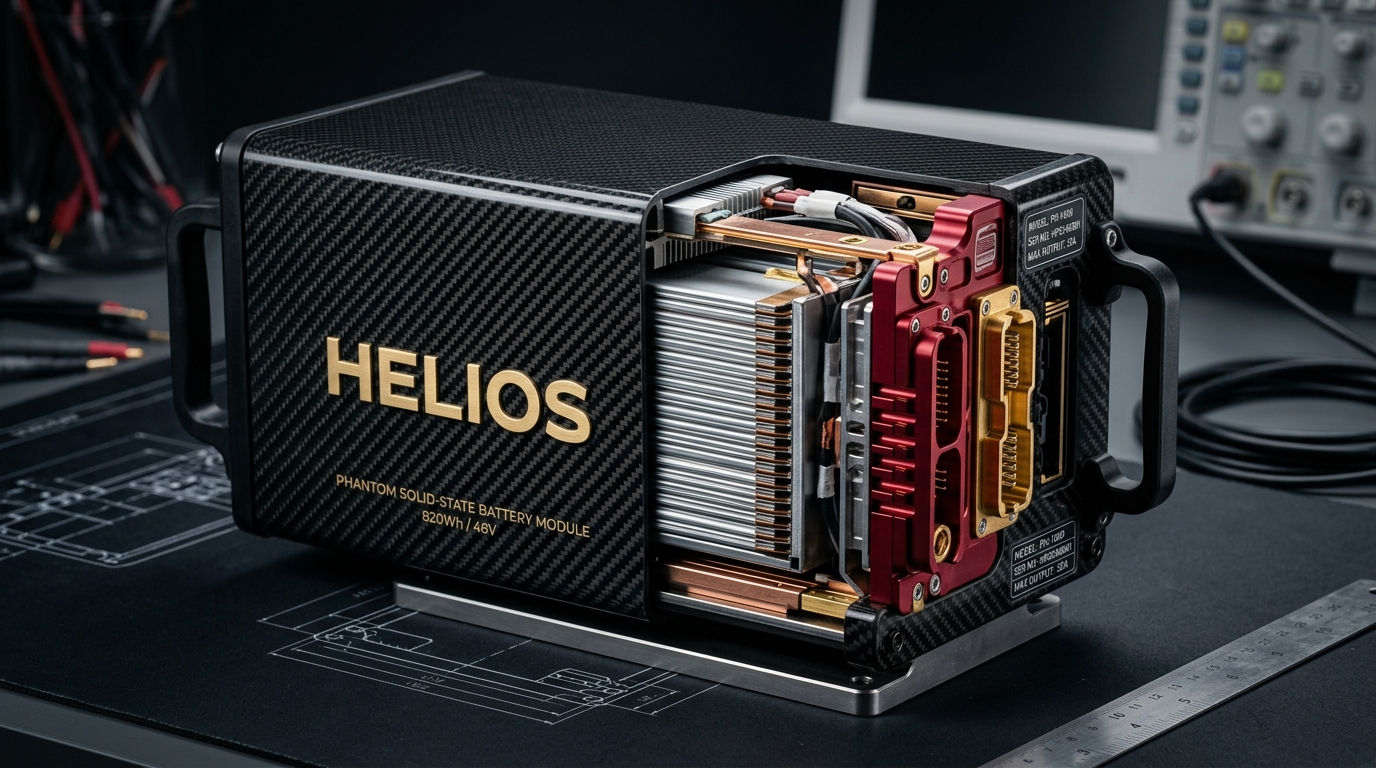
Hot-Swap Battery Modules.
Five solid-state battery modules occupy the floor tunnel of the Phantom. Each carries a quick-release handle and can be individually replaced at a HELIOS service point in under four minutes per module. Total usable capacity: 105 kWh.
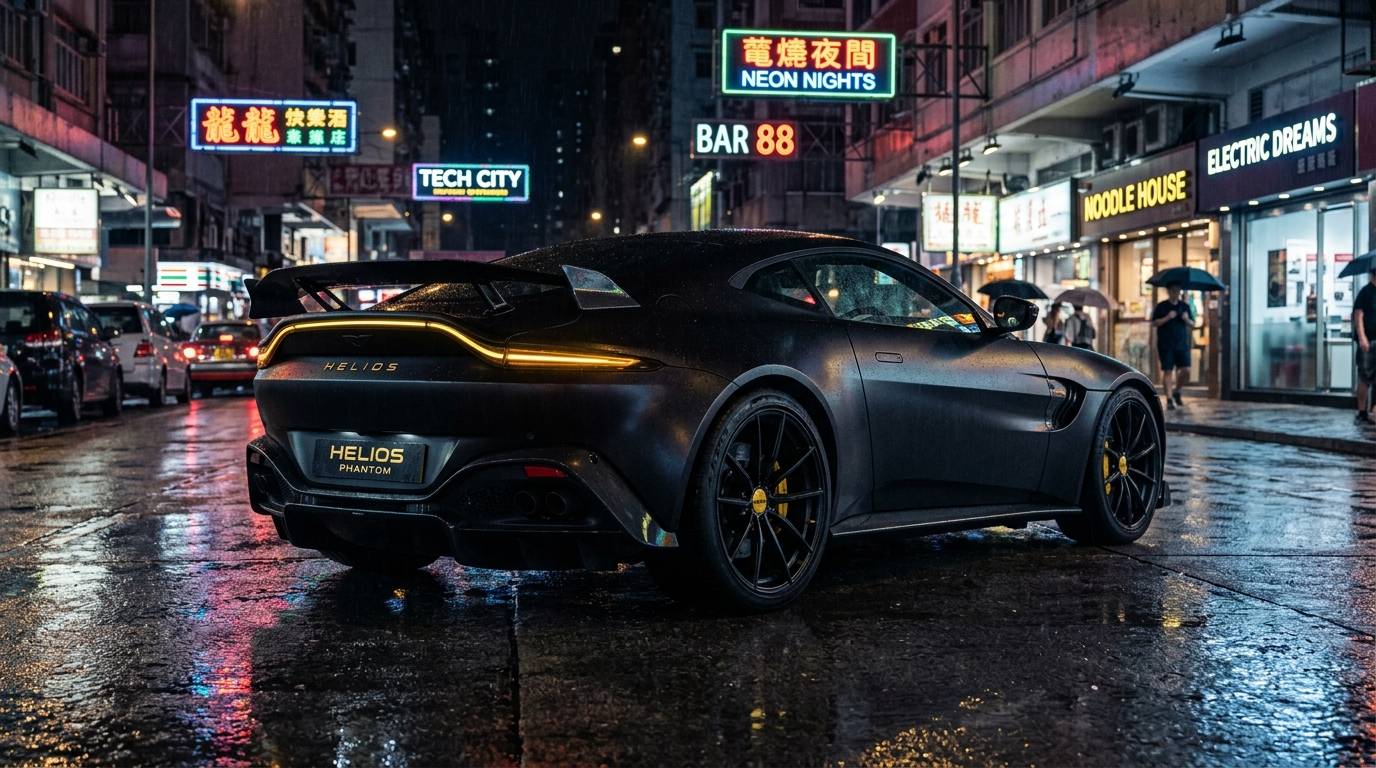
The Darkness Standard.
Every Phantom is engineered for night driving as its primary use. The HUD is calibrated to never exceed 80 nits, gold numerals readable at speed without causing visual adaptation. Only three things exist inside at night: the OLED bar, the HUD projection, and the road.
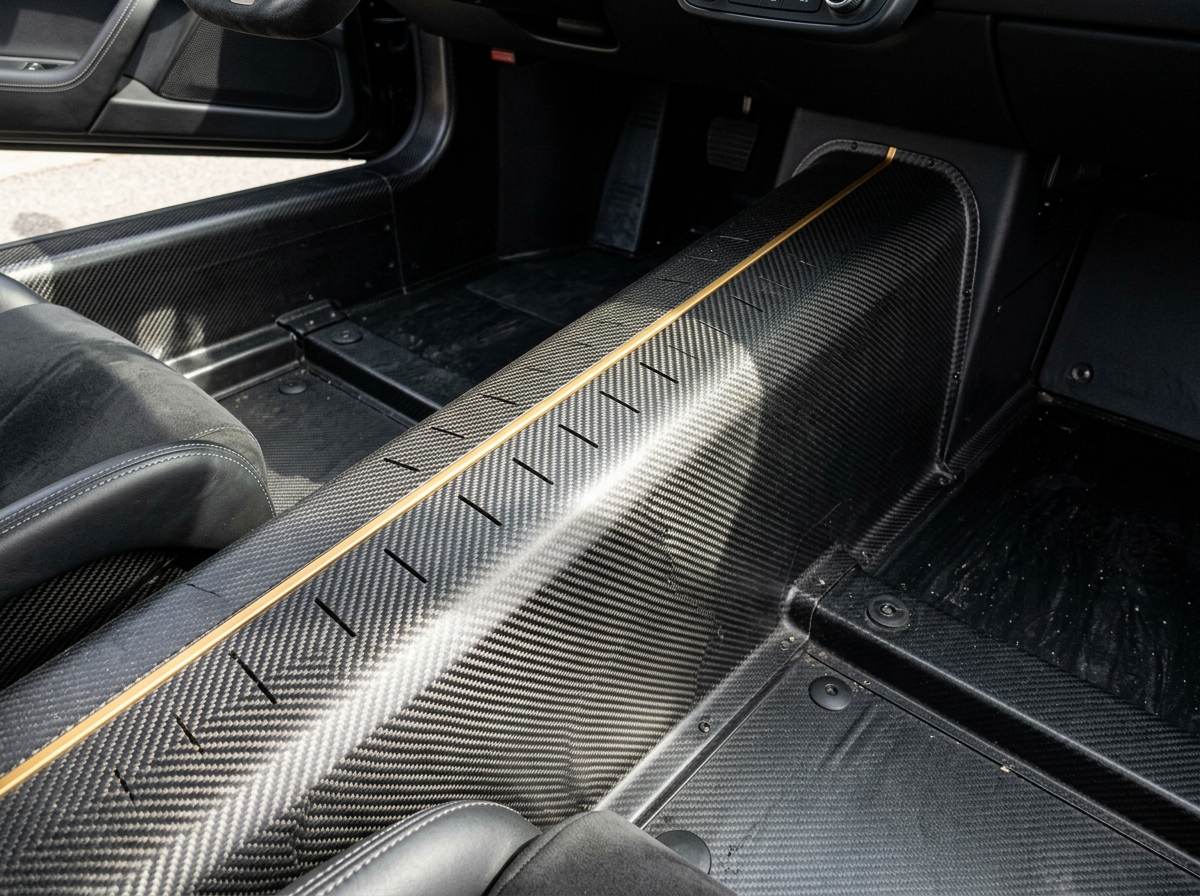
Carbon Thermal Tunnel.
The carbon fibre floor tunnel extracts 800W of heat from the battery pack at track speeds. At 15cm intervals, 3mm ventilation slots are cut through the weave, invisible at a glance, critical at 300 km/h. You don't feel cool. You feel exactly right.
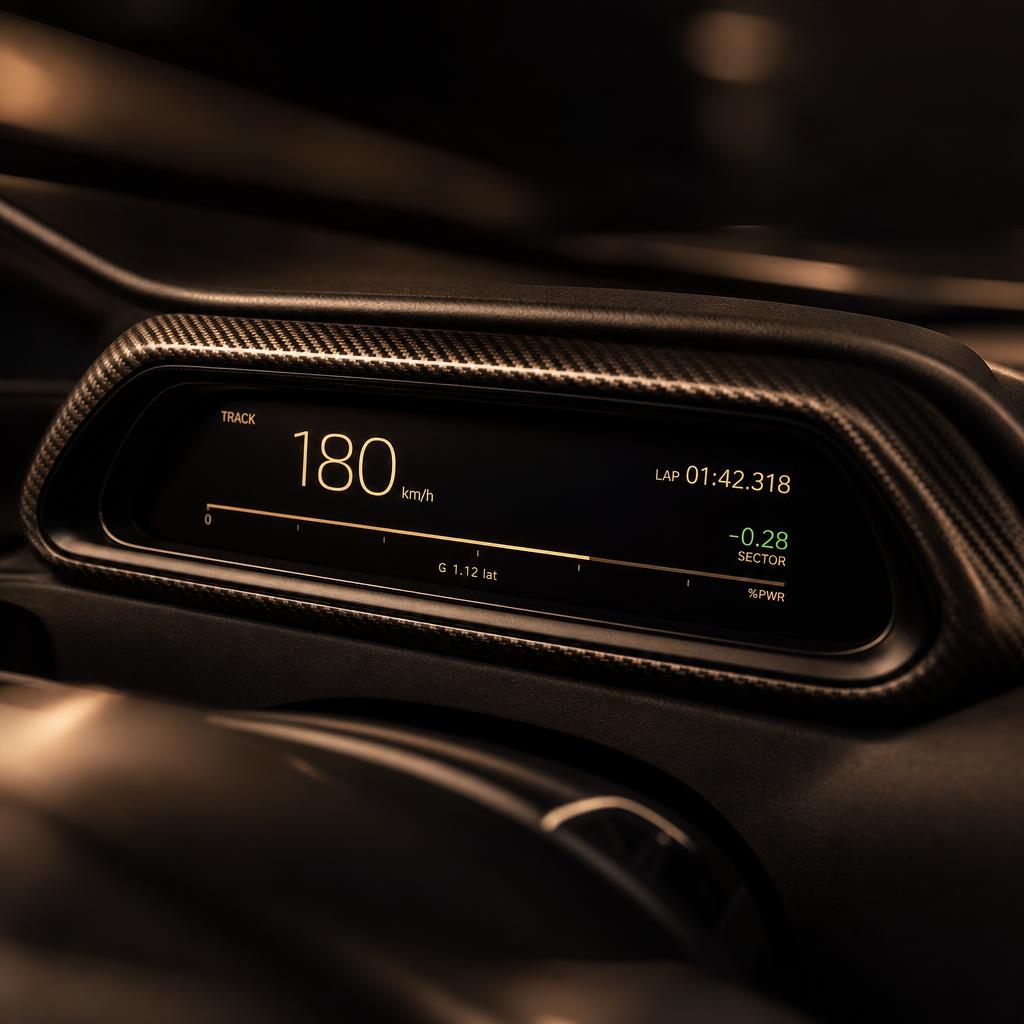
Track Mode Bar.
Press Track and the OLED bar re-composes. Speed takes centre in a restrained gold numeral. Power draw resolves to a thin horizontal arc. Live lateral G, a rolling lap timer, and a sector delta in green or red. Nothing else. The dashboard becomes an instrument, not a screen.
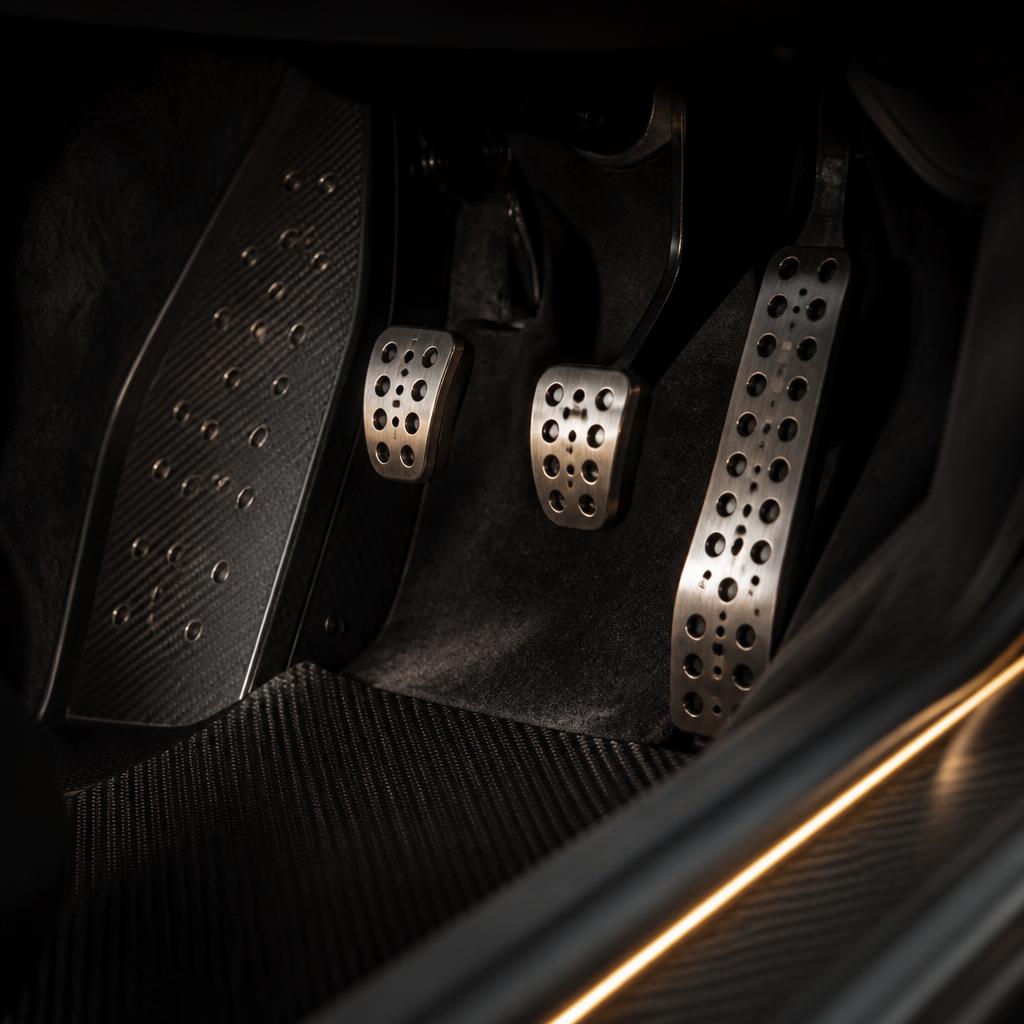
Titanium Pedal Box.
Two floor-hinged pedals machined from solid titanium, laser-drilled to 3.2 mm perforations, coated in a matte anti-slip finish. Travel calibrated within a millimetre. A thin amber-gold LED along the sill catches the metal at night.
Startup Ritual.
Approach and the Phantom is silent. Press the flush ignition disc, a single amber-gold ring illuminates the OLED bar, the HUD paints one horizontal line across the windshield, and the seat contours to the last saved driver map. No engine sound. No animation. Just readiness.
Iron Ember Scent.
The Phantom carries a single scent by default, Iron Ember: leather, cold graphite, a trace of woodsmoke. Micro-dosed only in Comfort mode; disabled entirely in Track. The car knows when to disappear from the senses.
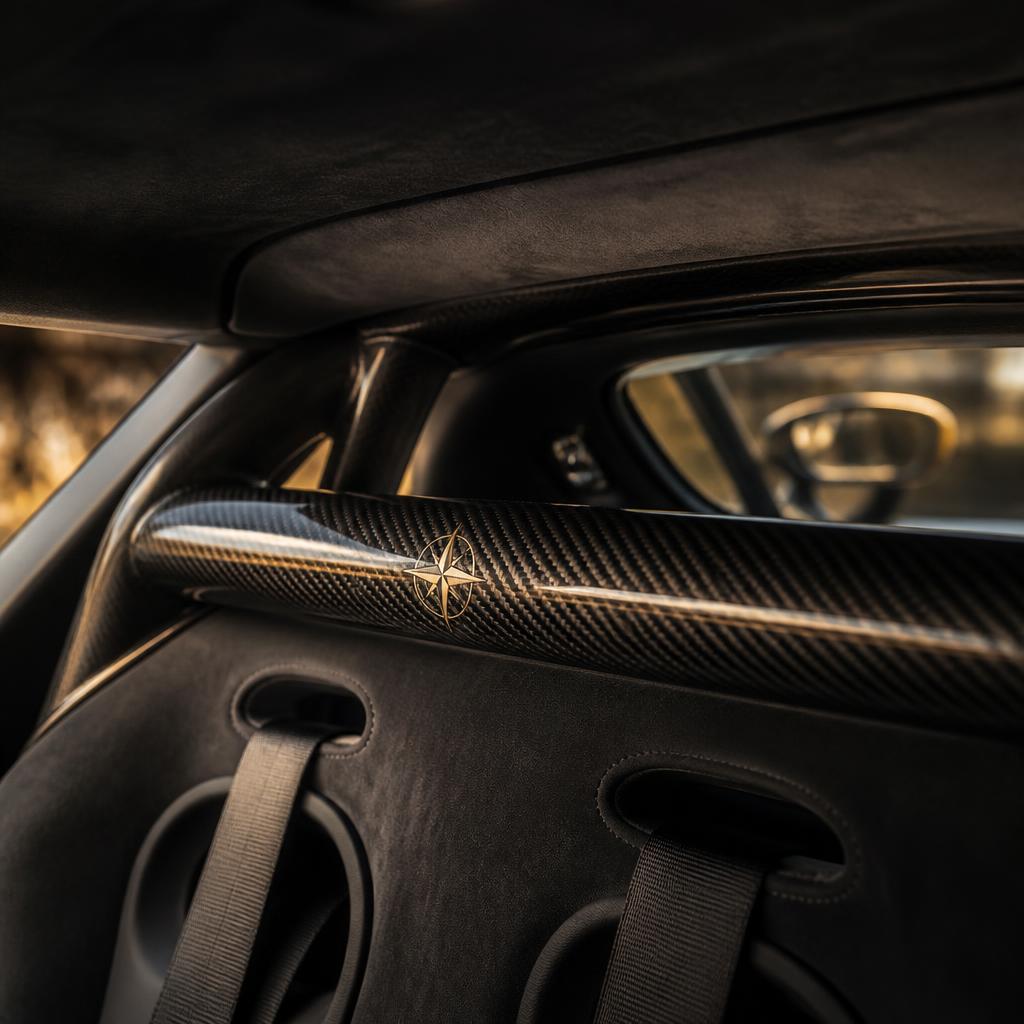
Integrated Roll Structure.
A raw carbon-fibre crossbeam runs behind the front occupants, tied into the chassis at four points. Homologated for closed-circuit use, invisible from outside the cabin. A single inlaid gold compass mark sits at its centre, the only ornament on a structural member.
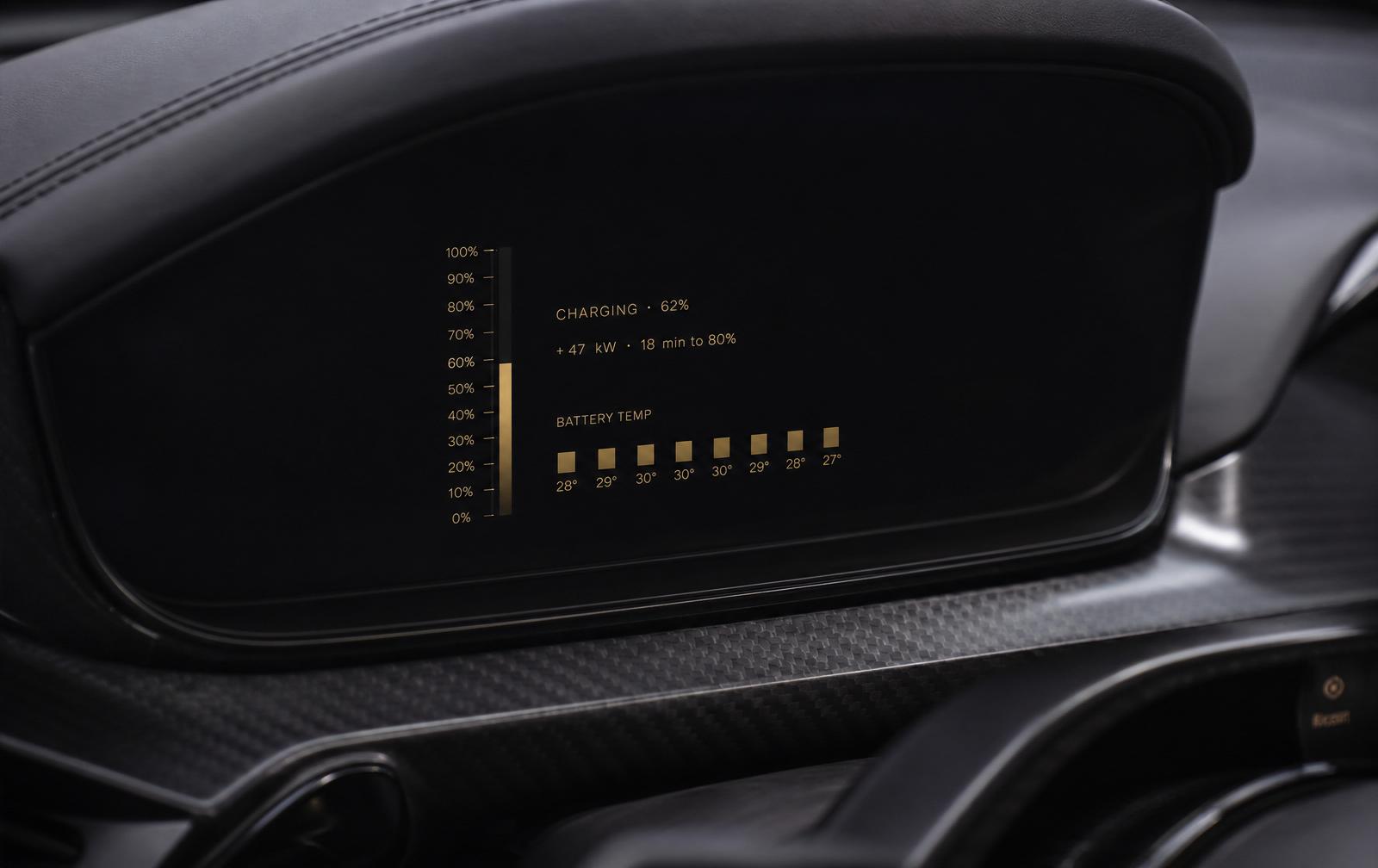
Track Charging State.
Between sessions, plug in and the cluster switches to a charge-up readout: a slim vertical bar climbing from empty toward full, live kilowatts, minutes to the next optimal window, and pack temperature across every module. Nothing shouts. The dashboard speaks the language of the day.
Toolkit Frunk.
A 55-litre front compartment fitted with a laser-cut foam insert holds a tyre pressure kit, tethered charging cable, torque wrench, and a single microfibre roll. Everything a track day demands, nothing that isn't earned by weight.
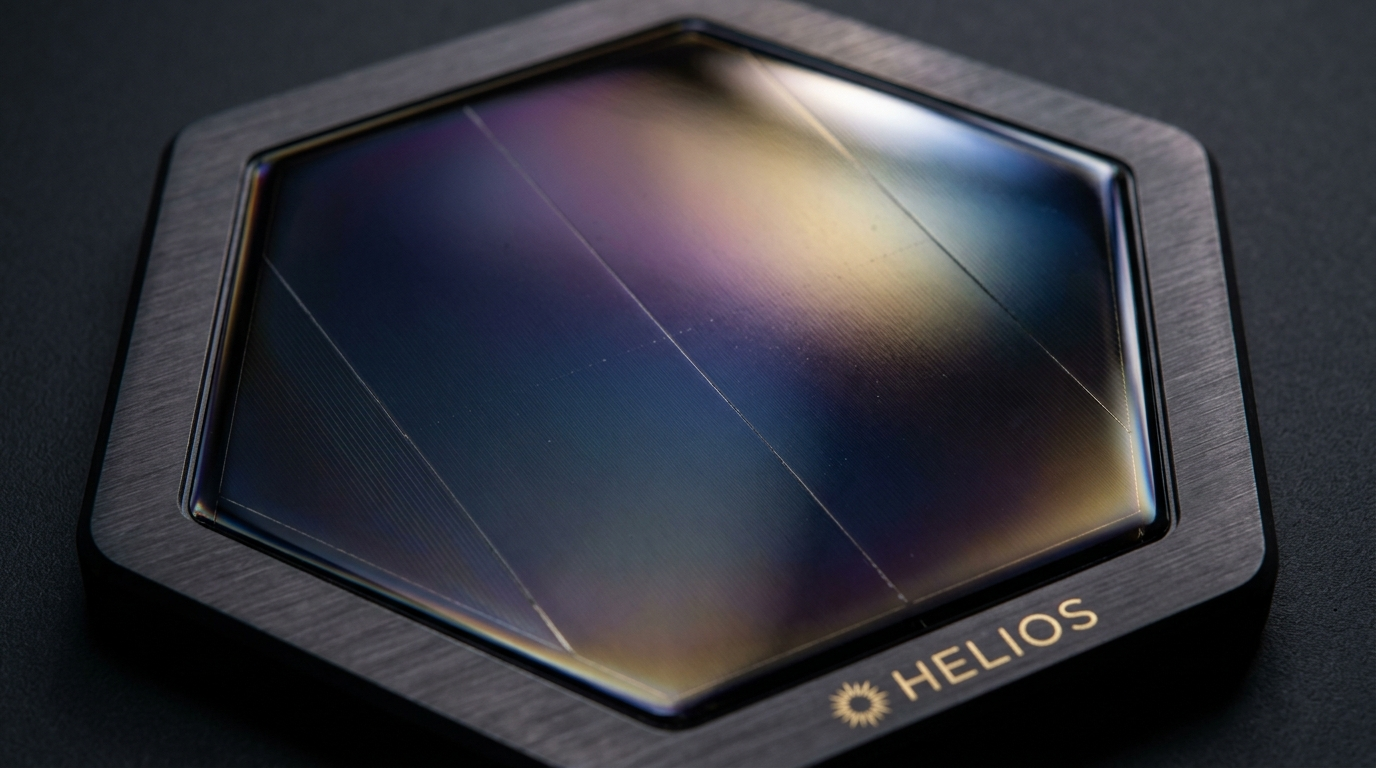
Every surface harvests.
HelioGlass is a perovskite–silicon tandem photovoltaic surface engineered to replace every exterior glass and panel. It doesn't sit on top of the car, it IS the car. Seven laminated layers, anti-reflective nano-coating, tempered outer glass, EVA encapsulant, a perovskite top cell for high-energy photons, a silicon bottom cell for infrared, a second encapsulant and a polymer back sheet, patterned at 847 hexagonal cells per square metre with gold interconnect traces. In full sun it returns 38 to 65 kilometres of solar-only range per day, depending on model.
- 34.85%Cell Efficiency, tandem stack
- 7Laminated Layers
- 847Hexagonal Cells per m²
- 38 to 65 kmSolar-only Range, per day
We do not believe the automobile is finished. We believe it has been waiting, quietly, for a century, to be drawn again. This time around the sun.